
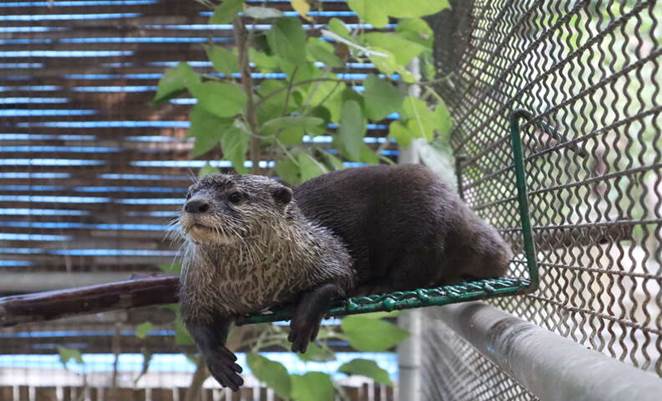
His name, eventually, was Pip. But for the longest time—years that blurred into an eternity of silence and shadow—he was nothing but a low, compact heat source confined within a box.
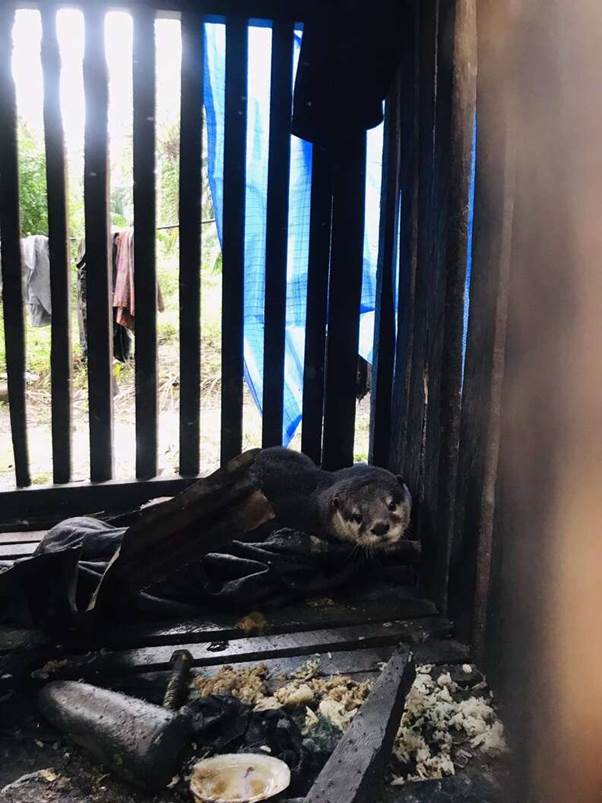
Pip was born a creature of perpetual motion, a sinuous ribbon of muscle and fur designed to dance with the current. Yet, his world was a perfect, unyielding rectangle. It was constructed of rough, splintered pine that smelled perpetually of damp sawdust, stale bedding, and the metallic tang of fear. He had known no other horizon than the four walls of this crate.
The dimensions of his cage were unforgiving: long enough to turn around if he tucked his tail just so, and tall enough to sit, but never stand fully erect to stretch the elegant arch of his back. Otters are built for the liquid three-dimensional world of rivers and streams, for the joyous, frictionless glide of a dive. Pip’s life was an exercise in negation, a brutal denial of his species’ essence. His days were reduced to a repetitive, small orbit—pacing the worn floorboards until the rhythm became a low, anxious hum in his spirit.
He didn’t know the texture of a smooth river stone or the scent of a fresh fish caught in clear water. All he possessed was a strange, deep, inexplicable ache—a primal need that manifested as a desperate urge to dig, to scratch, to tunnel through the wooden prison that held him. He would often huddle in the darkest corner, his small, dark eyes wide with terror and defeat, looking painfully small against the backdrop of his enormous, unmet biological need.
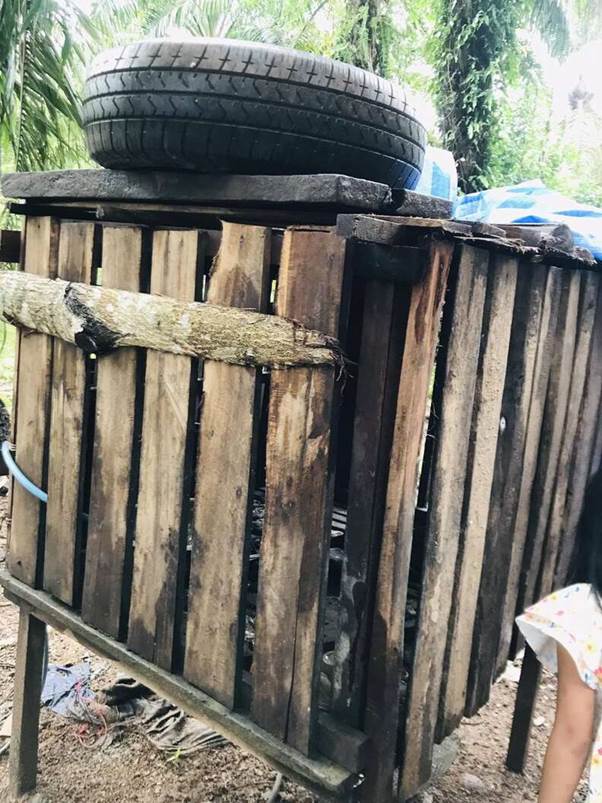
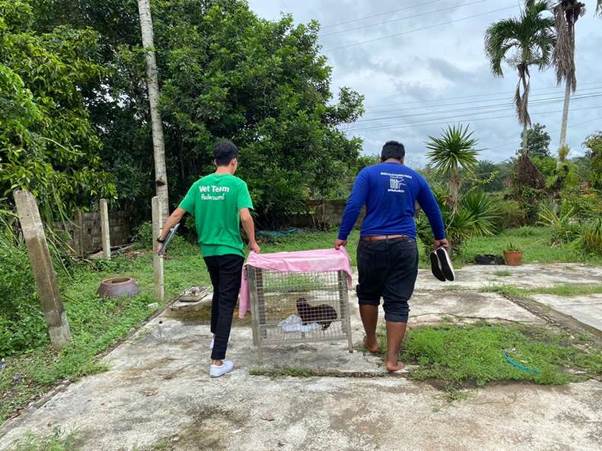
The stillness that defined his life was violently broken one morning. The sounds weren’t the usual low human murmurs; they were right outside his pine prison—sharp voices, the scrape of boots, and the sudden, alarming scent of fresh air and anxiety.
The box was lifted.
The motion was dizzying and terrifying. Pip tumbled against the rough wood as the crate rotated, his world flipping sickeningly. He had never experienced vertical movement, only the constrained horizontal shuffle of his pacing. He squeaked, a high, nervous sound, convinced this abrupt chaos was the prelude to something awful.
When the jarring finally stopped, the silence that followed was immense. A single panel of the box—the front door that had always been bolted—was slowly and carefully unfastened.
Light exploded into his habitat.
It was blinding, a harsh, brutal shock to his retinas accustomed only to twilight. Pip immediately retreated to the deepest shadow, shielding his eyes from the brutal sun that poured in. What he saw was a flash of green—a riot of growth, of towering trees and soft, uneven earth. It was chaotic, sprawling, and overwhelmingly foreign.
He tentatively poked his head out, his whiskers twitching madly, trying to process the raw, unfiltered reality of the world he had only imagined in the deepest corners of his genetic memory.
The humans were quiet and slow. They were the rescuers, the people who had followed a quiet tip and spent months securing his freedom. They wore thick gloves, and their voices were gentle, measured tones designed to minimize his panic. They carefully tipped his heavy wooden crate onto a grassy surface, creating a gentle ramp that led not to a barren room, but to an enormous, sprawling enclosure of green space.
Pip hesitated, trembling. His body was too conditioned to the confines of the wood to accept the sprawling invitation of open space. The anxiety of the unknown was a paralyzing counterweight to the instinct of freedom.
He slid out of the box, feeling the foreign, giving texture of grass beneath his paws. It was soft, yielding, and smelled overwhelmingly of life and decay, a thousand different scents overwhelming his senses. He wobbled, unused to the vast, open horizon. His leg muscles, long atrophied by lack of use, struggled to support his frame as he took a few tentative, awkward steps, looking like a beginner learning to walk.
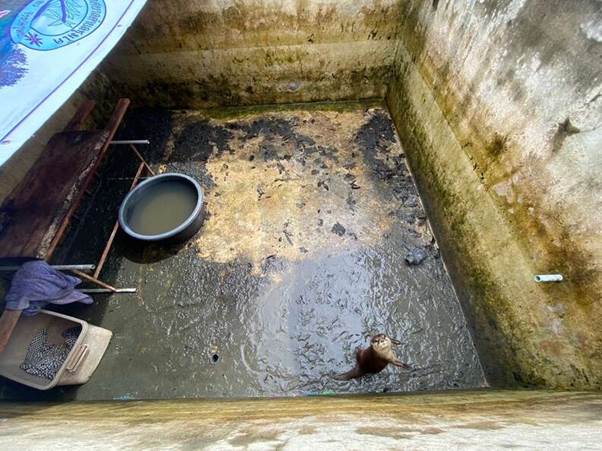
He was in an outdoor sanctuary, a safe haven of thick, comforting undergrowth and large, welcoming stones. He didn’t run. He crept, hugging the ground, trying to make himself as small as possible in the overwhelming largeness of freedom.
The rescuers watched from a respectful distance, their hearts heavy with hope. They knew the next stage was critical. He had to face his element.
He continued his cautious exploration until he reached a rise in the land. Peeking over a low, smooth boulder, he saw it.
It was an expanse of sheer, glassy blue, catching the sunlight in a way that defied the dull color of his wooden prison. It was a specially-designed rescue pool, filtered and calm, waiting just for him. The sheer volume of the material—water—was a shock. It was not a bowl or a trough; it was a boundless, fluid world.
Pip froze. The scent of the water, dense and mineral, spoke of fish, slick mud, and a kind of wild, fundamental joy he couldn’t possibly comprehend, yet instinctively craved.
He moved toward the edge, inch by cautious inch. The water was not solid. It was fluid, moving slightly, reflecting the great, blue, unfamiliar sky. He looked down into the clear depths, and what he saw there terrified him: infinite space. This was the source of that low ache he’d always felt. This was the missing, essential piece of his life. But after years of rigidity, the idea of surrender to the liquid was frightening. He was a creature born to swim, standing on the brink of his destiny, paralyzed by fear.
One of the lead rescuers, a woman named Amelia, knelt quietly a few feet away. She didn’t press him. She didn’t speak. She simply placed a small, smooth, water-worn stone at the edge of the pool. It was a silent, non-verbal invitation—a bridge between the hard earth and the soft water.
Pip stared at the stone, then at the water. He was breathing heavily, his small body a tight coil of tension. He reached out a front paw, his claws extended, searching for the solid, predictable floorboards that had been his only reality. They weren’t there. There was only air, and then the mysterious, cool surface.
He lowered his paw, slowly, tentatively.
His sensitive webbing, designed by evolution for propulsion, felt the resistance. Touch.
It was cold, wonderfully cold, and immediately enveloping. The sensation did not trigger panic; it triggered something far deeper and older than memory. A silent, powerful hum resonated in his chest—a forgotten language of current and slickness. That first, single, hesitant touch was a profound shift in his entire understanding of reality. He realized this substance was not a threat; it was a mirror, a reflection of himself.
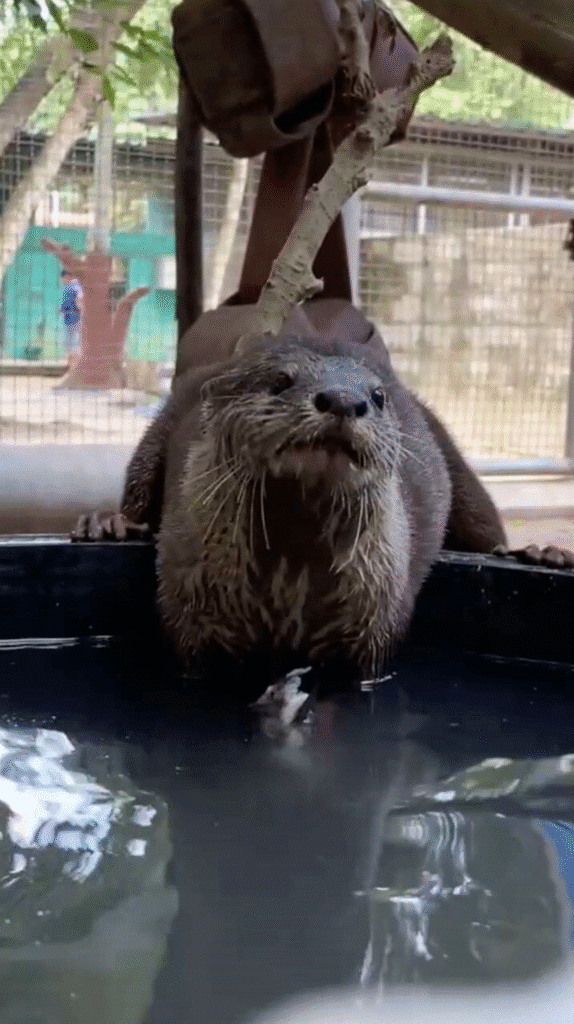
With a sudden, sharp sound of inhalation, Pip stopped fighting his nature. The years of confinement, the terror, the doubt—they all fell away in the face of this overwhelming, instinctive pull. He pushed off the ground, not with the practiced grace of a wild otter, but with a clumsy, flustered tumble, his small brown body breaking the surface tension with a splash.
The water swallowed him whole.
For a split second, there was disorientation. The noise of the world was gone, replaced by a deep, hollow, rushing silence. He opened his eyes. The world was green and silver, refracted light and dancing bubbles. He flapped his front paws in confusion, trying to remember the rigid walking motion of the box.
But then, the ancestral memory, the innate, perfect knowledge of his species, took over. His powerful tail acted as a rudder. His webbed feet pushed against the density of the water, and he realized with a flash of instinct that he wasn’t falling; he was flying.
He tucked his ears, streamlined his body, and powered forward. He swam a perfect, effortless figure-eight, faster and faster, a brown torpedo of pure, unadulterated joy. He twisted, he flipped, he corkscrewed, sending spray high into the air as he broke the surface to gulp great lungfuls of fresh air. He was a creature reborn, finally home. The tight, stressed muscles of his box life loosened, flexing with the power they were meant to wield.
He chased the bubbles he made, chattering with an ecstatic, wild sound that was half-squeak, half-giggle. He was an otter, doing the one thing he was born to do, and the sheer euphoria of that realization transcended years of cruelty. He rolled onto his back, floating for a moment, his paws in the air like he was marveling at the sky he could finally see.

He plunged back down, diving deep and surfacing with a playful leap, landing with a splash that soaked Amelia on the bank. She simply laughed, wiping the tears of pure relief from her face.
Pip was no longer defined by the geometry of confinement, but by the endless, fluid grace of the silver stream. The box was forgotten, a distant, splintered memory against the vast, healing current of his new life. His life had begun again, one ecstatic, watery splash at a time.