Wildlife

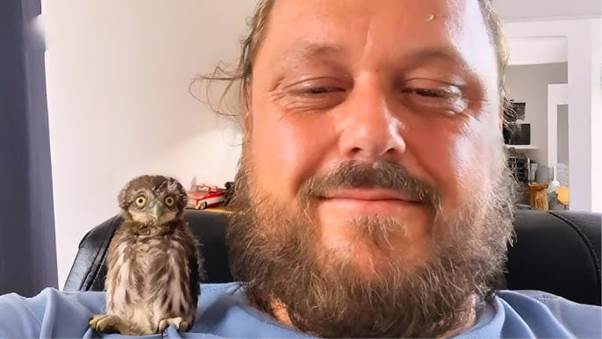
Construction Workers Shocked As Four Baby Owls Tumble Out Of Air Vent

At first, the noise on the construction site sounded routine — clanging tools, hammer strikes, and workers’ voices bouncing around the half-built structure. But then, in the middle of the bustle, came a completely different sound: high-pitched cries. Within seconds, the workers realized something unexpected had happened. From a torn air vent above, four fluffy screech owl babies had fallen straight to the concrete floor. Startled and unsure what to do, the crew immediately contacted WILD Florida Rescue (WFR) for help. Volunteers Adriane and Lulu answered the urgent call, not knowing this would become one of their most delicate rescues yet. A Family Suddenly Separated When Adriane and Lulu arrived, they quickly assessed the situation. The babies were too young to fly, and while their frantic parents circled nearby, there was no way for them to scoop their little ones back into the nest. Following guidance from Florida Fish and Wildlife, the team’s first attempt was to install a temporary nest box just outside the construction zone, giving the parents a safe alternative. But the owls had other ideas. “The parents did not like that,” WFR shared. The adults refused to approach the box, leaving their babies hungry and alone through the night. A Rescue Plan That Took Days, Not Hours Realizing the first attempt had failed, the volunteers regrouped. Early the next morning, they carefully returned the nest box closer to the owls’ original spot inside the structure. This time, the parents swooped right in, resuming care for their chicks as if nothing had happened. The relief was immediate, but the team knew there was still risk. Construction work continued, and the vent that had sent the babies tumbling once could easily do so again. To protect the owlets while still respecting the parents’ instincts, Adriane and Lulu tried one last adjustment. They created a hybrid solution — a nesting box positioned between the inside and outside of the construction site. It gave the parents easy access but kept the little ones out of harm’s way. Finally, everyone — workers, rescuers, and owl parents — could breathe easier. Watching The Babies Grow Stronger To ensure the family remained safe, WFR installed cameras near the nest. Over the following weeks, volunteers monitored the owlets’ progress daily. What they witnessed was magical: the once helpless fluffballs slowly grew feathers, strength, and confidence. Day by day, the little owls transformed into fledglings, stretching their wings and learning the lessons only their parents could teach. By keeping them with their family rather than moving them into human care, Adriane and Lulu had given the babies the very best chance at thriving in the wild. Why Owls Sometimes Nest in Strange Places Screech owls are cavity nesters, meaning they seek out small, enclosed spaces for their eggs and young. In natural settings, this usually means hollow trees. But as more wild areas are cleared for development, owls often adapt by nesting in chimneys, vents, or even attics. While it may look unusual, this behavior shows just how resourceful wildlife can be. Unfortunately, it can also put both the animals and humans in difficult situations, like this construction site rescue. Experts recommend installing owl nesting boxes in safe areas nearby to give these birds better options — something homeowners and builders alike can consider. A Rescue That Truly Came Full Circle Not every wildlife rescue goes according to plan. Some require quick fixes; others demand patience, persistence, and creativity. For Adriane, Lulu, and the team at WFR, this mission had been nerve-wracking but worth every moment. “We are so thrilled, even with all the work and worries, that these babies remained with their parents to fledge,” WFR celebrated in a post. In the end, the construction workers got to continue their project, the volunteers ensured the owlets’ safety, and the owl parents were able to do what nature intended — raise their family together. It’s a story that proves sometimes the best rescues are not about removing wildlife from danger but about finding ways to let families stay whole. And for these four owlets, that made all the difference.

Construction Workers Shocked As Four Baby Owls Tumble Out Of Air Vent Read More »
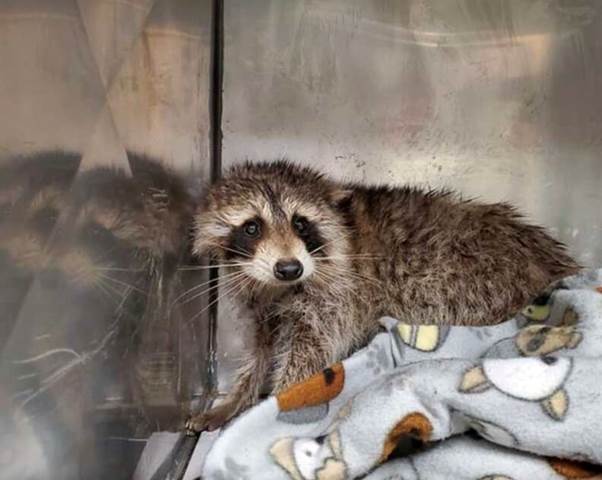
Rescuers Watch In Horror As Raccoon Falls From Bridge — Then Cheer When He Swims To Safety

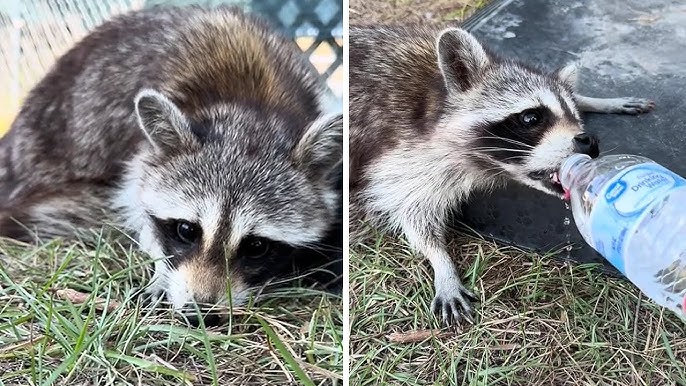
Every morning, Tom drove the same familiar route across Pennsylvania Route 462, a bridge towering above the wide Susquehanna River. The commute had become so routine that little ever caught his eye — until one chilly autumn morning when something unusual made him slow down. Perched on top of one of the stone bridge piers, shivering against the wind, was a furry figure. At first, Tom wasn’t even sure what it was. But when he looked closer, he realized it was a raccoon — stranded, alone, and in deep trouble. A Commuter’s Compassion Tom figured maybe the animal was just lost and would find his way down. But when he passed by again the next day, the raccoon hadn’t moved an inch. The poor creature looked frozen in place, clinging to the cold stone. Tom quickly pulled over. He didn’t have rescue gear, but he had something he hoped might help — the jacket off his back. Carefully, he draped it over the raccoon to keep him warm. Then he called the local police and prayed rescuers would come soon. Sadly, when Tom returned after work that evening, his heart sank. The raccoon was still there, tucked under the jacket, too scared or weak to move. This time, Tom knew he needed specialized help — and he reached out to Raven Ridge Wildlife Center. A Rescue Attempt Gone Wrong With the assistance of local police, Raven Ridge rescuers climbed onto the narrow bridge platform, nearly 100 feet above the icy river. The plan was simple but risky: net the raccoon and bring him safely back to land. For a few tense minutes, it seemed like the rescue would work. But just as they were about to catch him, a loud tractor-trailer thundered across the bridge. Startled by the noise, the raccoon panicked — and leapt off the edge. Time froze. The rescuers gasped, horrified, watching the animal tumble toward the water. Against The Odds — A Fighter Survives Just when everyone feared the worst, a small furry head broke the surface of the river. The raccoon was alive — and he was swimming. Against the strong current and biting cold, he paddled determinedly toward shore. The rescue team split up. One rescuer remained on the bridge to keep eyes on him, while another rushed down to the riverbank. Despite being exhausted, the raccoon hesitated at the shoreline, too frightened to climb out on his own. That’s when the rescuers made the ultimate show of bravery — wading into the freezing water themselves. Slowly and gently, they guided the raccoon into their net and carried him onto solid ground. Wrapped in blankets, the shivering little survivor was finally safe. A Happy Ending Back In The Wild At Raven Ridge Wildlife Center, rescuer Tracie Young examined the raccoon. Miraculously, aside from being wet, chilled, and worn out, he had no serious injuries. “He looked great,” Young said. “I just think he kind of got in the wrong place at the wrong time.” After a short period of rest and recovery, the raccoon was released back into the wild — exactly where he belonged. “We were able to release him,” Young shared. “Hopefully this raccoon never sees another person again.” For Tom, the kind commuter who refused to ignore an animal in distress, and for the brave Raven Ridge team who risked the freezing waters to save him, the raccoon’s survival was nothing short of a miracle. Sometimes, even the smallest creatures remind us how resilient life can be — and how much hope exists when compassion and courage come together. 🦝💙

Rescuers Watch In Horror As Raccoon Falls From Bridge — Then Cheer When He Swims To Safety Read More »

Rescuer Arrives Just In Time To Save A Bucket Full Of Wild Hedgehog Babies

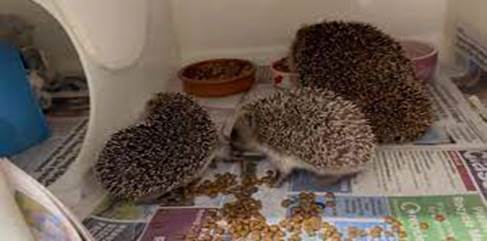
When Katie Walton, founder of Katie’s Wildlife Rescue in the UK, answered a recent emergency call, she had no idea just how unusual the case would turn out to be. The caller explained that a nest of hedgehogs had been discovered in distress, and Katie immediately grabbed her supplies and headed out the door. “I was shocked when I heard the details,” Katie recalled. “Five babies and their mum all together — that’s very rare. Usually, I’ll see one to three hoglets in a nest, but five is extraordinary.” A Nest In Danger The hedgehog family had chosen a quiet corner of a garden to build their home. Sadly, their safety was suddenly threatened by a curious cat who had been prowling nearby. Worried that the cat might injure the hedgehogs, the homeowners quickly stepped in and gently lifted the family out of harm’s way. By the time Katie arrived, the hedgehogs were bundled together in a bucket, camouflaged among twigs and leaves. For a moment, Katie said it almost looked like a pile of garden debris rather than a group of tiny lives in need. “When I looked closely and saw all those little prickly bodies squirming together, I couldn’t believe it,” Katie said. From Bucket To Safety Katie carefully transported the family back to her rescue center. The first step was a full health check to make sure both mum and babies were stable. Once settled, she moved them into a large outdoor animal run where they would be safe, warm, and well-fed. There, the hog family thrived. They feasted on nutritious meals several times a day, growing stronger with each passing week. Katie described watching them waddle around their new enclosure as one of the most rewarding parts of the process. A Joyful Release Just over a month later, the hedgehogs were ready for the next chapter. Their spines had strengthened, their weight was healthy, and their natural instincts were sharp. It was time to go home. Katie carried the family back to the wild and gently opened their carrier. One by one, the hedgehogs toddled out, disappearing into the undergrowth where they belonged. “It felt amazing to watch them go,” Katie said with a smile. “It’s always bittersweet because you get attached, but knowing they’re safe and free is the best reward. It’s a privilege to care for them, even for a short time.” Why This Rescue Matters Hedgehogs are facing serious challenges in the UK. Their numbers have been declining steadily due to habitat loss, road traffic, and predation. Every successful rescue and release helps strengthen the population, and each litter of hoglets represents hope for the species’ survival. Katie hopes that stories like this one will inspire more people to look out for local wildlife. “If you ever come across a hedgehog out during the day or in an unsafe spot, reach out to a rescue. They depend on us noticing when something isn’t right.” Thanks to Katie’s quick response — and a little bucket that kept them safe — one hedgehog mum and her five babies are now back where they belong: wild, free, and thriving.

Rescuer Arrives Just In Time To Save A Bucket Full Of Wild Hedgehog Babies Read More »

A Rainbow Pigeon Does Exist — And He’s Absolutely Magical

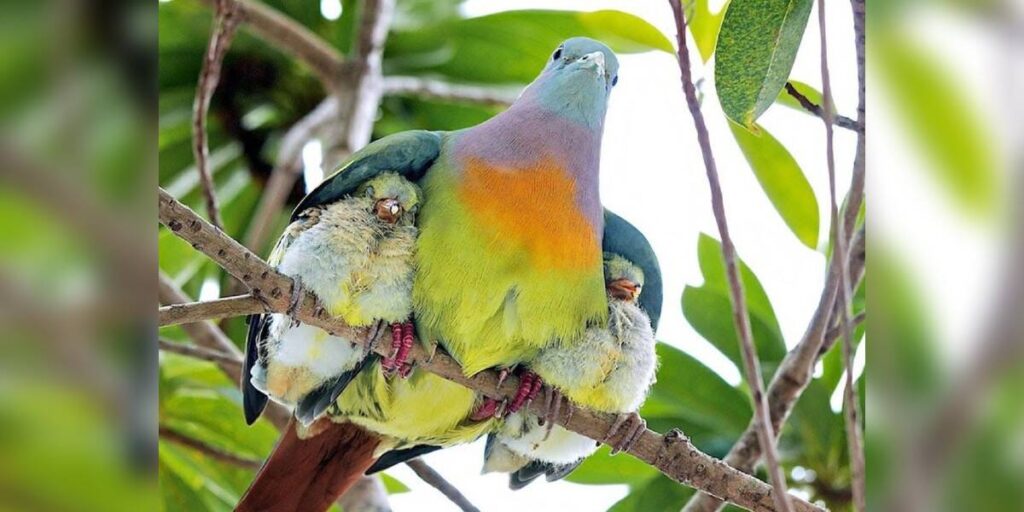
Pigeons aren’t usually praised for their looks. More often, they’re labeled as “flying rats” because of their abundance in cities and their reputation for leaving behind messy droppings. But one stunning bird is challenging that stereotype — and making people see pigeons in an entirely new way. Meet The “Hot Pigeon” The internet went wild when photos of a pink-necked green pigeon started circulating. Social media users quickly nicknamed him the “hot pigeon,” and one glance explains why. This bird is anything but ordinary. His feathers shimmer with shades of emerald green, lilac purple, peachy pink, golden yellow, and soft blue. When the sunlight hits, his plumage looks almost painted — as though nature dipped him in a rainbow. Compared to the muted grey city pigeons we’re used to, he looks like a real-life work of art. Where These Birds Call Home Sadly, you won’t spot a pink-necked green pigeon perched on city rooftops in New York, London, or Paris. These magical birds live in Southeast Asia, where they can be found in tropical forests, gardens, and coastal mangroves. Countries like Thailand, Vietnam, Malaysia, and Indonesia are some of the best places to see them. Unlike their bread-loving city cousins, these pigeons have a much healthier diet. They’re fruit specialists, with a love for figs, which makes them essential seed dispersers. By eating fruit and spreading seeds across wide areas, they actually help forests regenerate — proving that beauty and purpose often go hand in hand. Why They Went Viral What made the pink-necked green pigeon so special online is not just his rainbow feathers but also the way he highlights the overlooked beauty of everyday pigeons. Next time you see a common pigeon on the street, take a closer look — the shimmering purple and green iridescence on their neck feathers glows beautifully in the sunlight. While city pigeons may not have the rainbow palette of their Southeast Asian cousin, they too carry subtle magic if you know where to look. Fun Facts About Pink-Necked Green Pigeons A Reminder About Beauty in the Ordinary The pink-necked green pigeon might look like something out of a fairy tale, but his biggest gift is the reminder that beauty comes in many forms. Even the pigeons you see daily in your city — the ones you might ignore — carry hints of iridescent feathers and remarkable survival skills. Next time a pigeon struts past you on the sidewalk, don’t dismiss it as “just a pigeon.” Remember that its rainbow cousin exists, and together they prove that the natural world is full of wonders, waiting for us to notice.

A Rainbow Pigeon Does Exist — And He’s Absolutely Magical Read More »

The Day a Crowned Jewel Spider Chose Her Head as Its Throne

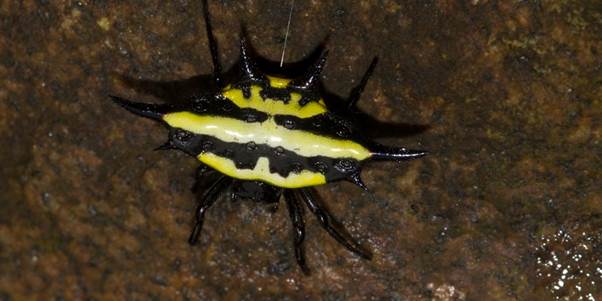
An Ordinary Day With an Unexpected Twist For most people, stepping outside to check on the garden is nothing more than a small daily ritual. For Wendy Gardiner, who lives in the warm, lush surroundings of Queensland, Australia, it’s an especially meaningful part of her routine. Her backyard is home not just to flowers and greenery, but also to a native beehive she lovingly tends. On this particular day, Wendy strolled into her yard with the simple intention of making sure her bees were thriving. She wasn’t expecting anything unusual. The air was calm, the garden alive with the familiar hum of insects, and everything seemed as normal as ever. That’s when it happened. Something small and surprisingly solid dropped directly onto her head. A Strange Little Creature With a Royal Look Peering down, Wendy saw something bright and unusual resting among the leaves. It was alive, its legs twitching. She counted — one, two, three … eight. It was a spider. Now, Wendy isn’t easily unsettled by spiders. Having lived in Australia for many years, she’s seen her fair share of them — from huntsmans larger than her hand to tiny garden spiders spinning delicate webs. But this one was different. Its body was a brilliant orange, decorated with striking patterns that seemed almost too artistic to be real. As she studied the unusual arachnid, her English roots came through in the funniest way. To her, the creature looked like a Cornish pasty — the classic folded pastry her family enjoyed back in England. And as if that weren’t whimsical enough, the spider also appeared to be wearing a tiny crown etched into the pattern of its back. Solving the Mystery: A Rare Jewel Spider Despite her years of observing garden wildlife, Wendy had no idea what kind of spider she was looking at. She knew it was special, but she needed confirmation. She carefully snapped a few photos of her strange little visitor and posted them in a local nature group on Facebook, asking if anyone could help identify the species. Within hours, the answers started pouring in. The mystery was solved: the spider was a four-spined jewel spider (Gasteracantha quadrispinosa). This species is rare and only found in two places on Earth — Queensland, Australia, and New Guinea. Jewel spiders are known for their colorful, jewel-like markings, and the one Wendy had encountered was particularly eye-catching because of its crown-shaped design. A Moment of Wonder That Still Lingers Once the initial surprise wore off, Wendy decided to simply observe. She noticed that when the spider had fallen from her head, it had actually been working on a web nearby. By brushing against it, she had unknowingly disrupted its construction. Still, the spider seemed undeterred. With remarkable patience, it began spinning again, carefully weaving silken threads into a new home. Wendy stood quietly in her garden, transfixed by the sight. Though her crowned visitor has not returned since, Wendy now walks into her garden with a renewed sense of wonder. Every buzzing bee, every flicker of movement among the leaves, reminds her that surprises often come when we least expect them — sometimes even landing right on our heads.

The Day a Crowned Jewel Spider Chose Her Head as Its Throne Read More »

Lucky Legs: The Midnight Raccoon Rescue That Left a Driver Stunned

A Midnight Drive Turns Into a Shocking Discovery Driving late at night often feels peaceful — empty roads, the hum of the engine, and nothing but headlights stretching into the dark. That’s exactly how one Texas woman’s trip toward Amarillo began. But just past midnight, her quiet drive suddenly turned into a night she’ll never forget. As she cruised along the road, a raccoon darted out of the darkness. She swerved quickly to avoid hitting him and thought the little animal had made it safely away. Relieved, she kept driving for another hour, unaware that her unexpected passenger had found himself in a terrifying situation. When she finally pulled over in Amarillo, something caught her eye — a pair of tiny legs sticking out from the front grille of her car. Her heart sank. Somehow, the raccoon had become trapped inside her vehicle without her realizing it. A Rushed Call for Help and A Careful Rescue Under the Stars The city was asleep — it was after 2 a.m., and few people were around. But the woman knew she needed help immediately. She reached out, and soon Wild West Wildlife Rehabilitation Center (WWWRC) rehabber Amee Markham Smith and Officer Milburn were on the way. When they arrived, they were greeted by the heartbreaking sight of a raccoon wedged head-first into the grille. His little body was stuck so tightly that any attempt to pull him out risked causing more harm. Time was ticking, and the frightened animal needed a careful plan. Smith, experienced in wildlife rescues, thought quickly. With the car owner’s permission, she decided the only safe solution was to cut into the grille itself to free the raccoon. It wasn’t an easy decision — but saving his life was worth every scratch on the car. The team worked patiently, using tools to cut open part of the vehicle. The raccoon, though exhausted and scared, stayed still as if he knew these humans were there to help. Slowly, bit by bit, the rescuers widened the opening until at last, they were able to gently slide him out. Relief washed over everyone. The raccoon, shaken but alive, was carefully placed into a cozy transport crate. His midnight ordeal on the open road had finally come to an end. From there, he was rushed to WWWRC headquarters, where a team of rehabbers immediately began checking him over. Healing With Love and Care A full-body exam revealed the toll of his frightening experience. The raccoon had suffered a broken jaw and a small fracture in his spine. Serious injuries, yes — but treatable with the right care. At the center, he was given medication, pain relief, and a quiet temporary home where he could rest. Staff monitored him closely, making sure he was eating, drinking, and slowly regaining his strength. Just a few days later, rehabber Smith happily updated supporters:“He’s actually recovering quite well considering everything he went through.” Her words were a testament to not only the raccoon’s resilience but also the dedication of the wildlife team working tirelessly to help him heal. A Second Chance at Wild Freedom Today, the little raccoon is on the mend. Each day he grows stronger, proving that even after the harshest struggles, survival is possible with compassion and care. His jaw is healing, his movement is improving, and his lively spirit is returning. While it will still take time before he’s ready to be released back into the wild, the team at WWWRC is hopeful. Until then, he’ll stay surrounded by people who believe every animal — big or small — deserves a second chance. His story is more than just an unusual roadside rescue. It’s a reminder of the fragile balance between humans and wildlife, and how, with empathy, we can turn accidents into opportunities for kindness. And for the driver who discovered those little legs sticking out of her grille, the midnight drive she once thought was ordinary will forever be remembered as the night she met one very lucky raccoon.

Lucky Legs: The Midnight Raccoon Rescue That Left a Driver Stunned Read More »

An Orphaned Rhino Finds Healing In The Embrace Of A Baby Zebra

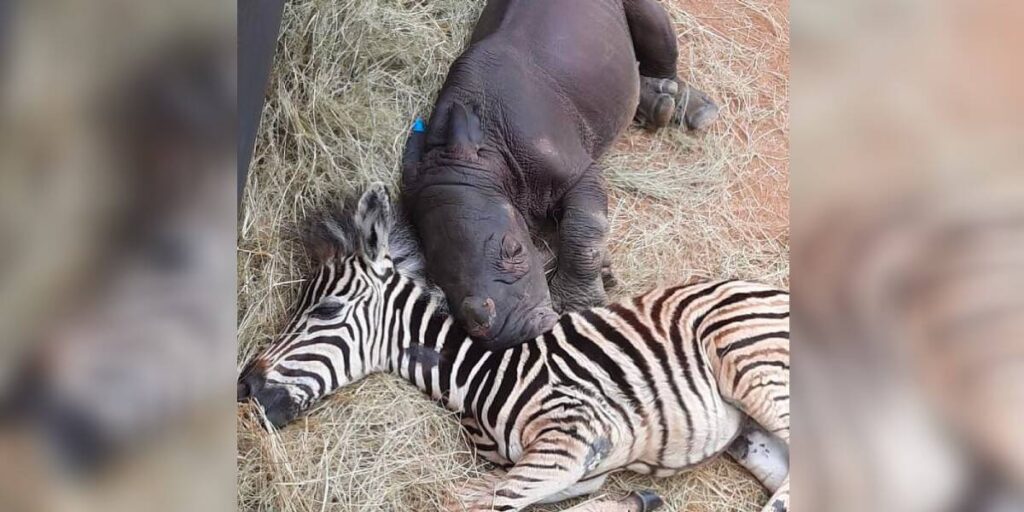
A Fragile Beginning For Daisy In early December, rangers on patrol in Kruger National Park, South Africa, came across a heartbreaking sight — a newborn rhino calf, barely hours old, lying weak and alone. The tiny calf, later named Daisy, had already endured more hardship in her first few hours of life than most animals do in a lifetime. Without her mother by her side, Daisy stood no chance of surviving in the wild. Exhausted, underweight, and struggling to regulate her body temperature, she needed urgent intervention. Rangers acted quickly, airlifting her by helicopter to the Care For Wild Rhino Sanctuary, one of the world’s leading rehabilitation centers for rhinos. There, she was placed in the sanctuary’s intensive care unit, where a dedicated team provided round-the-clock monitoring. She received regular feedings, immune-boosting treatments, and specialized warming equipment to help stabilize her fragile body. Still, despite all the medical attention, Daisy faced an even deeper need — comfort and companionship. Another Orphan In Need Of Care Only a week before Daisy’s arrival, the sanctuary had taken in another vulnerable baby — a tiny zebra foal named Modjadji. Found motionless on the reserve after fierce storms, Modjadji was weak, dehydrated, and gasping for air. Rangers estimated she was just a week old when she was rescued. Much like Daisy, Modjadji required emergency care. For days, she hovered between life and death, her small body fighting to recover from the trauma of being abandoned so early. Slowly, with careful feeding and a safe environment, the zebra foal began to regain her strength. Though their species could not be more different, Daisy and Modjadji shared something powerful: both were orphans, both were fighters, and both desperately needed connection. An Unlikely Friendship Blossoms At first, Daisy and Modjadji occupied neighboring spaces in the sanctuary’s ICU. Caregivers kept their interactions minimal, focusing on their individual recoveries. But as days passed, the two little ones began showing curiosity about one another. “When they were strong enough to stand, they started moving closer,” said Louwhen Bowker, a spokesperson for the sanctuary. “They would peek at each other, sniff curiously, and eventually, they just couldn’t resist interacting.” It didn’t take long before the bond deepened into a true friendship. Daisy, who would normally rely on her mother for reassurance, began finding comfort in Modjadji’s presence. Meanwhile, Modjadji seemed to sense Daisy’s need and responded with quiet affection. “They cuddle together at night, which gives Daisy comfort and security,” Bowker explained. “Modjadji has become her chosen family — a constant friend who can be with her 24/7.” Their connection isn’t just heartwarming; it’s vital to Daisy’s development. Rhinos are highly social creatures, and prolonged isolation can affect their emotional well-being. With Modjadji by her side, Daisy has the companionship she needs to grow without becoming overly dependent on human caretakers. Sisters By Choice, Not By Birth Over time, Daisy and Modjadji have become inseparable. They spend their days exploring side by side, finding reassurance in each other’s company. Wherever Daisy goes, Modjadji follows closely, often pressing her small body against the rhino calf as if to remind her, You’re not alone anymore. At night, the two curl up together, their breathing synchronized as they drift off to sleep. For Daisy, who once lay abandoned and trembling in the wild, the warmth of Modjadji’s body is the closest thing to a mother’s embrace. Their caregivers watch with joy as the unlikely sisters thrive. Both are growing stronger, gaining weight, and showing playful personalities. Daisy has started to develop the confident behaviors typical of rhinos, while Modjadji trots around her like a protective little shadow. The staff knows that one day, both animals will return to the wild — Daisy among rhinos, Modjadji among zebras. But until that day comes, their friendship will continue to be a lifeline. The story of Daisy and Modjadji is more than just a sweet tale of two animals finding comfort in one another. It’s a reminder of the resilience of life and the importance of connection. For the caregivers at Care For Wild Rhino Sanctuary, watching the two thrive together reinforces why sanctuaries exist. They provide not only medical care but also the emotional support that orphaned animals so desperately need. And for those who hear their story, Daisy and Modjadji stand as symbols of chosen family — proof that healing often comes from the most unexpected places. Someday, Daisy will roam free with her own kind, and Modjadji will join a herd of zebras under the African sun. But no matter where life takes them, their early bond will remain a testament to the power of friendship and the way love, in its purest form, transcends species.

An Orphaned Rhino Finds Healing In The Embrace Of A Baby Zebra Read More »

The Master of Disguise: How One Tiny Spider Outsmarted the Forest

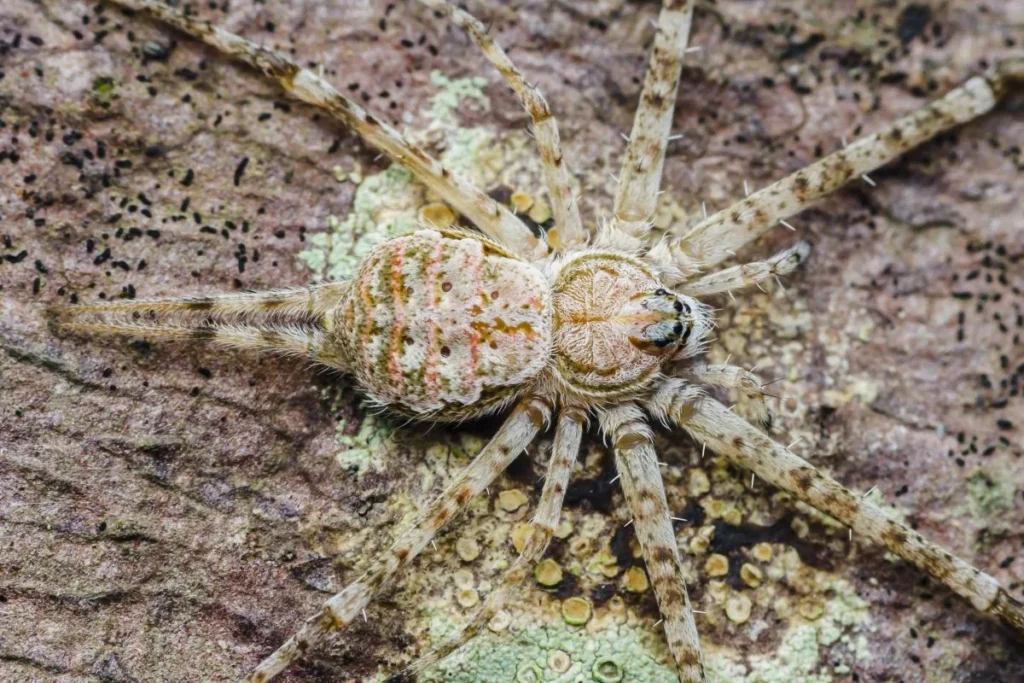
A Walk with a Purpose For most people, a leisurely walk through the trees is a chance to soak in the sunshine, listen to birdsong, or admire wildflowers. But for Ian Wallace, a dedicated spider enthusiast wandering through Raymond Island in Eastern Victoria, Australia, the goal was very different. While many people might recoil at the thought of getting close to spiders, Wallace actively seeks them out. For him, spiders aren’t creepy — they’re fascinating creatures that reveal the mysteries of survival and adaptation. Each outing is like a treasure hunt, with the hope of spotting species that blend so seamlessly into their environment they’re nearly invisible to the untrained eye. On this particular day, his sharp eyes noticed something unusual — a small bump on a branch that didn’t quite belong. For someone else, it might have been nothing more than part of the tree. But Wallace had a hunch, and that curiosity led him to one of nature’s most skillful illusionists. Meeting the Wrap-Around Spider As Wallace leaned in, his suspicion was confirmed: perched against the branch was a wrap-around spider, a creature so perfectly camouflaged that even seasoned hikers could pass it by without ever noticing. Unlike other spiders that weave webs between branches or settle into corners, wrap-around spiders use their own bodies as the ultimate disguise. They press themselves flat against branches, curving gently so that their form blends with the bark. Their patterns and colors mimic the wood almost exactly, making them appear like nothing more than an irregular knot in the tree. “I always pay close attention to any bumps on branches,” Wallace explained. “Sure enough, this time, that bump was alive. When I looked closely, I saw the delicate outline of the spider wrapped snugly around the twig.” For Wallace, it wasn’t just an exciting discovery — it was a chance to marvel at how far evolution had gone to protect such a tiny creature. A Masterclass in Camouflage The spider remained completely still, relying on its disguise rather than speed or aggression. From just a few feet away, it was almost impossible to tell where the bark ended and the spider began. Wallace took out his camera and carefully captured the moment. The photographs revealed just how flawless the camouflage really was. The spider’s colors matched the tree perfectly, from its earthy tones to the slight irregularities in its body that mimicked bark texture. What fascinated Wallace most wasn’t just the visual trick but the patience of the spider. While some creatures rely on sudden movements or defensive behavior, the wrap-around spider’s entire survival depends on trust — trust in its disguise, trust that predators will overlook it, and trust that even curious humans won’t disturb it. “He didn’t move at all,” Wallace recalled. “It was almost as if he knew that staying still was the safest thing to do.” That quiet confidence, that ability to fade into the background and remain undetected, is what makes the wrap-around spider one of Australia’s most remarkable arachnids. A Gentle Goodbye and a Bigger Lesson After spending several minutes with his camouflaged friend, Wallace decided it was best to leave the spider undisturbed. He continued his walk, scanning other branches for new encounters, but the experience lingered in his mind. For him, this wasn’t just another sighting — it was a reminder of the delicate balance between humans and the natural world. Many people fear spiders, but Wallace sees them as essential teachers. They remind us that survival doesn’t always mean being the fastest, strongest, or most aggressive. Sometimes it means knowing how to quietly exist, to blend in, and to adapt in ways that ensure safety without confrontation. As he reviewed his photographs later, Wallace reflected on how many wrap-around spiders must go unseen each day. They sit quietly on branches, overlooked but thriving, hidden in plain sight. Without enthusiasts like Wallace, most of us would never realize such creatures even exist — and yet they play an important role in the ecosystem, keeping insect populations in check and maintaining the balance of forest life. “Finding him made my day,” Wallace admitted. “It’s moments like these that remind me how extraordinary even the smallest creatures can be.”The wrap-around spider may not inspire the same awe as a kangaroo bounding across the plains or a colorful parrot soaring overhead, but in its own quiet way, it demonstrates the brilliance of nature’s creativity. Its disguise is more than just protection — it’s an art form perfected over generations of evolution. Thanks to people like Ian Wallace, who look closer instead of looking away, we’re reminded that the world is full of wonders hiding right before our eyes. All it takes is patience, curiosity, and a willingness to see beauty where others might see nothing at all. So the next time you’re walking in the woods and spot a strange bump on a branch, take a closer look. You might just discover one of nature’s greatest masters of disguise — a tiny spider who knows better than anyone how to disappear in plain sight.

The Master of Disguise: How One Tiny Spider Outsmarted the Forest Read More »

Eyes in the Sky: How Drones Uncovered the Hidden World of Elusive Tree Kangaroos

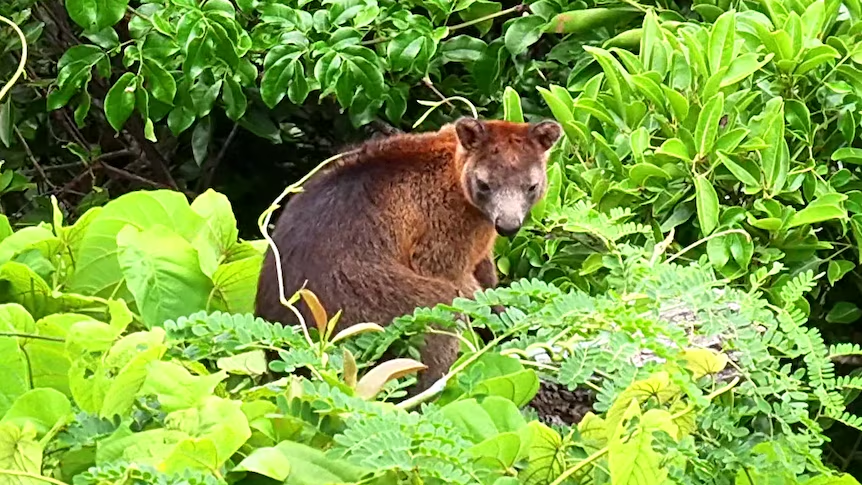
A Creature Almost Lost in the Canopy High in the misty rainforests of northern Australia and neighboring New Guinea lives an animal so rarely seen that many locals once spoke of it as if it were more legend than reality. Known as tree kangaroos, these unusual marsupials look like a cross between a wallaby and a possum, with strong tails and powerful limbs that let them leap gracefully between branches. Despite their remarkable adaptations, tree kangaroos have managed to stay almost invisible to science. Their habitat is remote, steep, and cloaked in thick vegetation that makes human access nearly impossible. For decades, researchers would trek through muddy trails and dense understory, only to return with little more than footprints, droppings, or the occasional fleeting glimpse of fur. But recently, a team of Australian researchers decided to approach the problem from an entirely new angle — quite literally. Instead of trudging through the jungle floor, they sent drones soaring above the canopy. What those machines discovered would change everything scientists thought they knew about these elusive creatures. Drones Unlock a Hidden World The breakthrough came when scientists fitted lightweight drones with thermal imaging cameras. These devices detect the heat radiating from warm-blooded bodies, allowing them to see animals that would otherwise be hidden under leaves or branches. “Thermal drones have opened a window into a world that was almost impossible for us to observe,” explained researcher Emmeline Norris, who led the study. “For the first time, we can track tree kangaroos without disturbing them — and without spending endless weeks in the forest hoping for a single sighting.” Within an hour of flight time, the drones picked up something astonishing. Six distinct heat signatures appeared on the screen, each belonging to a Bennett’s tree kangaroo — a species once thought to be vanishing due to deforestation and climate change. Spotting six individuals in such a short period was unprecedented. “For years, we would consider ourselves lucky if we saw one tree kangaroo in a week of ground surveys,” Norris explained. “To suddenly find six in less than an hour felt miraculous.” Why This Discovery Matters The Bennett’s tree kangaroo is one of nature’s most specialized climbers. Unlike its ground-dwelling cousins, this marsupial spends nearly its entire life in the treetops. Its long tail provides balance, while its strong hind legs allow it to spring between branches with surprising agility. Yet despite its incredible skills, the species is far from safe. Habitat loss due to logging and agricultural expansion has fragmented their rainforest homes. Rising global temperatures threaten to alter the delicate ecosystems where they survive. For conservationists, gathering accurate information about population sizes and locations is critical to creating strategies for protection. That’s why this new research is such a breakthrough. With thermal drones, scientists can cover vast areas quickly, collecting detailed data without putting themselves — or the animals — at risk. It means they can begin mapping where tree kangaroos still thrive and which areas require urgent conservation measures. “This technology gives us hope,” Norris emphasized. “We now have a way to truly understand how many tree kangaroos are left and what conditions they need to survive. That knowledge could be the difference between decline and recovery.” A Hopeful Future for a ‘Near-Mythical’ Species The findings from this study, published in the Journal of the Australian Mammal Society, mark the beginning of a new era in wildlife monitoring. Already, researchers are planning additional drone surveys to compare populations across different altitudes and forest types. The goal is to build a comprehensive picture of how these marsupials live — and what risks they face. For locals in Cape Tribulation, where the sightings took place, the news has been met with excitement. Many residents had long told stories of tree kangaroos glimpsed at dawn or dusk, moving like shadows among the leaves. Now, science has confirmed what folklore suggested: these remarkable animals are still there, quietly persisting in the rainforest. “Seeing their glowing outlines on the thermal camera was almost surreal,” one team member shared. “It felt like meeting ghosts that suddenly became real.” The hope is that, with continued monitoring and targeted protection, these “ghosts of the canopy” will thrive once again. Plans are already being discussed for stricter forest protections and for using drone technology in other regions where tree kangaroos are suspected to live. Ultimately, the study shows how blending modern technology with age-old curiosity can uncover wonders that were once out of reach. “For the Bennett’s tree kangaroo,” Norris concluded, “this innovation might be the key that secures their future. From obscurity, we may finally bring them into the light — not just for scientists, but for all who care about the rainforest’s hidden treasures.”

Eyes in the Sky: How Drones Uncovered the Hidden World of Elusive Tree Kangaroos Read More »

A Tired Woman Comes Home — And Finds Her Frog Statue Isn’t Alone

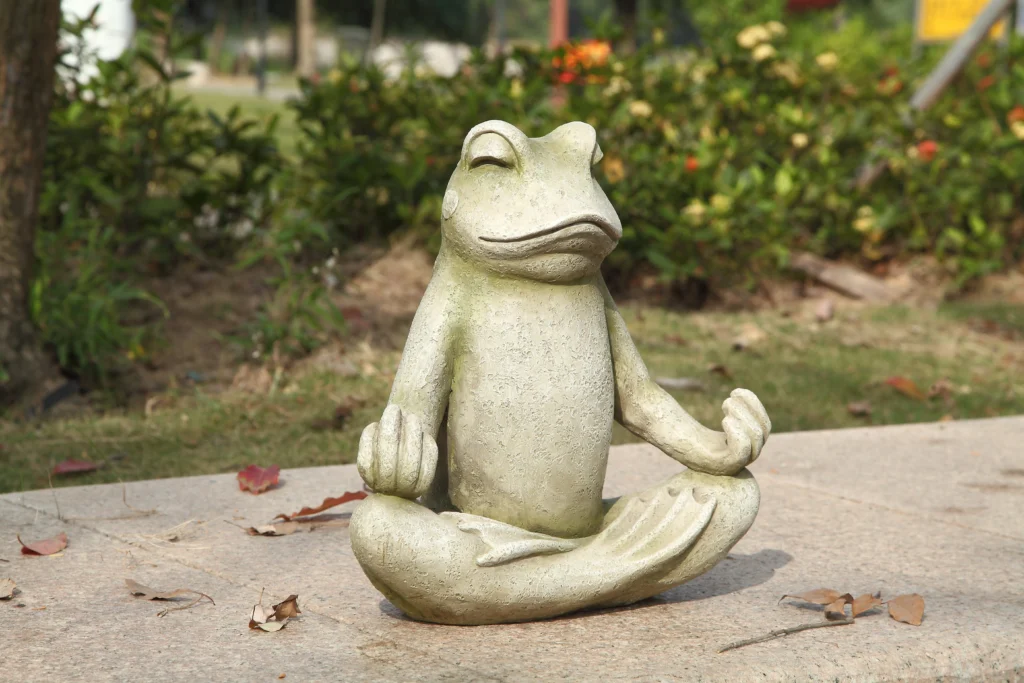
After a long, exhausting day at work, most of us just want to get home, kick off our shoes, and relax. That was exactly the mood Cassidy, a Florida resident, was in as she pulled into her driveway one humid evening. But the moment she stepped onto her porch, she felt a strange sense that something was… different. Almost as if someone, or something, had its eyes on her. She glanced around. Her front yard looked exactly the same. The porch lights glowed as usual. Nothing was out of place  until her gaze landed on a familiar little decoration that she had walked past hundreds of times before: the green ceramic frog statue beside her door. At first glance, it looked normal. But something about it didn’t feel right. And then she saw it. A Frog Within a Frog Cassidy’s frog statue, which she had always considered a charming little welcome piece, wasn’t looking quite so lifeless anymore. Peering out from the wide, open mouth of the statue was a pair of real eyes  bright, alert, and very much alive. Inside her frog-shaped ornament was an actual frog. “I had to stop in my tracks,” Cassidy later shared with a laugh. “I dropped everything I was holding because I just had to take a photo. It was too good to miss.” The tiny amphibian had apparently crawled inside, perhaps seeking shelter after Florida’s summer rainstorms. The ceramic frog, hollow inside, had transformed into a surprisingly perfect little hideaway. “It was almost like he chose it on purpose  a frog moving into a frog,” Cassidy said. “It was just too adorable and a little bit ironic.” An Unexpected Mood Booster Cassidy admits she was drained that evening. Work had taken its toll, and she had trudged home in need of a pick-me-up. But the moment she saw her new visitor, her fatigue melted away. “I could hardly believe it,” she recalled. “I’m a huge frog lover, so this was the sweetest surprise waiting for me. Honestly, it lifted my mood instantly. I went from exhausted to laughing in a matter of seconds.” And she wasn’t the only one who felt entertained. The little frog seemed quite content sitting in his statue-shaped home, quietly watching the world outside. He made no move to hop away. He simply stayed, as if enjoying the irony of his chosen perch. The Charm of Small Surprises There’s something heartwarming about moments like this  tiny, unexpected encounters with nature that bring joy when you least expect it. Cassidy could have easily walked past her statue without noticing, but because she looked a little closer, she discovered a scene almost too perfect to stage: a frog within a frog. “It’s funny how life works,” Cassidy reflected. “I came home thinking only about how long my day was, but then this little guy reminded me to pause and smile. Sometimes the smallest things really can change your whole mood.” Neighbors and friends who saw the picture Cassidy snapped were equally amused. Many joked that the frog had simply “found his twin” or that he was moving in with family. Others commented on how nature has a way of blending into everyday life in the most unexpected, delightful ways. Will He Stay? For now, it’s unclear whether the real frog will continue to use the ceramic frog statue as his personal home. Maybe it was just a temporary stop after the rain, or maybe he’ll return again and again. Either way, Cassidy says she’d be thrilled if he made the arrangement permanent. “I’d be more than happy to have him as my little porch roommate,” she said with a smile. “It’s like having a good-luck charm come to life.” And so, the story of a woman, her frog statue, and a surprise amphibian guest serves as a gentle reminder: sometimes, joy doesn’t come in big, flashy moments. Sometimes it arrives quietly  hidden in the most ordinary places  waiting to be discovered. For Cassidy, her decorative frog statue will never look the same again. Because now, whenever she walks up to her porch, she’ll remember the day a little creature turned her ordinary evening into something magical.Life often feels heavy and repetitive, but it’s moments like Cassidy’s  an ordinary object suddenly brought to life by an unexpected guest  that remind us of the quiet wonders hiding in plain sight. Sometimes, all it takes is a real frog to turn a ceramic one into a story worth telling.

A Tired Woman Comes Home — And Finds Her Frog Statue Isn’t Alone Read More »