Wildlife

No One Can Spot The Snake Hiding In This Family’s Backyard

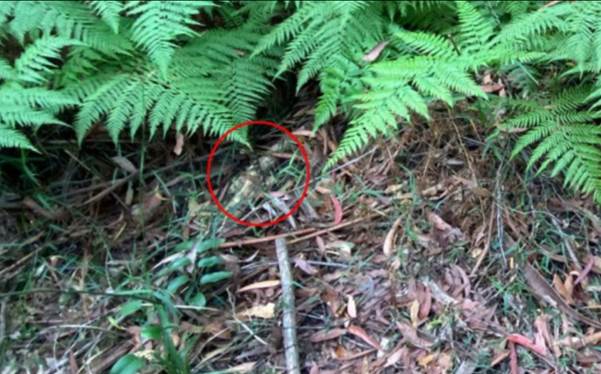
A Backyard Surprise For one Australian family, an ordinary afternoon turned into a startling encounter when they realized they weren’t alone in their yard. At first, everything seemed perfectly calm — the sun was out, the kids were playing, and the garden looked peaceful. Then, they noticed something unusual: a snake hidden among the cracks of their stone retaining wall. Knowing it was too risky to handle on their own, the family quickly contacted Snake Catchers Brisbane & Gold Coast, a professional rescue service that specializes in safely relocating snakes. “Most people call us right away when they see a snake,” a spokesperson explained. “Even in Australia, where snakes are common, it’s always a surprise to find one so close to home.” The Snake You Can’t See When the snake catcher arrived, they immediately spotted the reptile’s clever hiding place. The snake was so well camouflaged against the wall that even trained eyes could barely pick him out at first. Before relocating him, the expert snapped a photo and later shared it online — sparking a viral challenge. Thousands of people attempted to find the snake in the picture, and many admitted defeat. Once spotted, though, the snake became impossible to “unsee.” The post quickly turned into a social media sensation, with viewers calling it one of the hardest hidden-animal challenges they’d ever seen. The mystery guest was identified as an eastern brown snake, one of the most venomous land snakes in the world. While their reputation is frightening, experts reminded the public that these snakes usually avoid humans unless provoked. Why Retaining Walls Attract Snakes The snake’s hiding spot wasn’t random. Retaining walls like the one in this family’s yard are prime locations for snakes. The cracks and crevices provide protection, shade from the sun, and plenty of opportunities to hunt small animals like rodents and lizards. In some cases, snakes even use the spaces to lay eggs. “We snake catchers really aren’t fans of these kinds of walls,” the rescuers admitted. “They create endless hiding places for snakes.” For homeowners, this means being extra cautious when walking near such structures, especially during warmer months when snake activity increases. A Safe Relocation and a Viral Lesson After taking the now-famous photo, the expert safely captured and relocated the eastern brown to a more suitable area away from people. The family breathed a sigh of relief knowing their yard was safe again, while the snake had been given a chance to live peacefully in the wild. The story also served as a reminder of the delicate balance between people and wildlife in Australia. By sharing rescues like this online, Snake Catchers Brisbane & Gold Coast hopes to educate the public on coexisting with snakes — treating them with respect while avoiding unnecessary risks. What began as a nerve-racking discovery ended with a safe relocation, a viral internet challenge, and a valuable lesson: sometimes the wild is closer than we realize, hidden in plain sight.

No One Can Spot The Snake Hiding In This Family’s Backyard Read More »
Diver Mistakes ‘Seaweed’ For Rare Animal — And Discovers Something Extraordinary

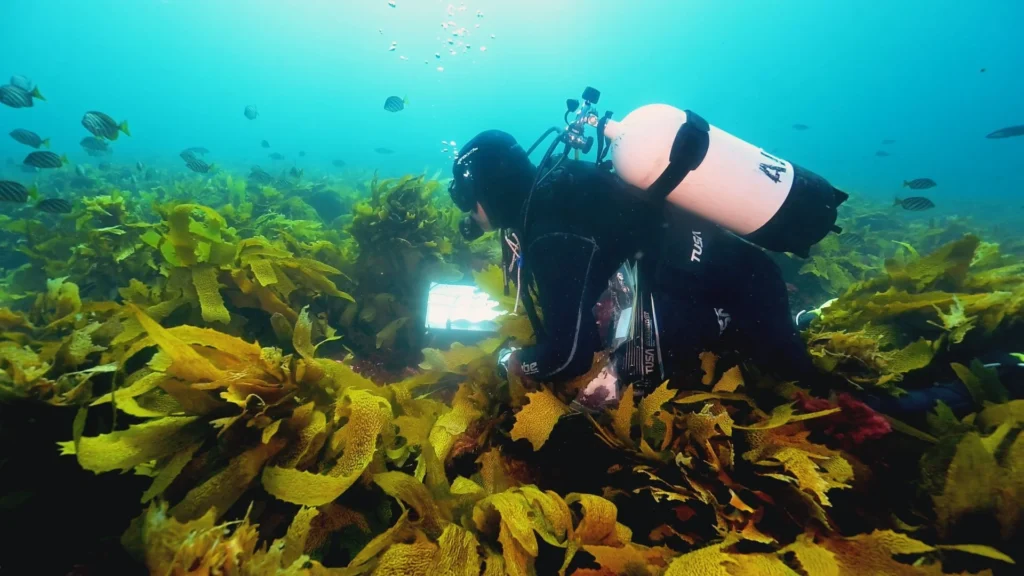
A Rumor Sparks Curiosity For scuba diving content creator Jorinde Maré, the ocean has always been a place of wonder. Based in Bonaire, a Caribbean island blessed with turquoise waters and thriving coral reefs, she has spent countless hours beneath the waves documenting marine life. Every dive is a chance to discover something new, but even seasoned divers don’t often stumble upon creatures that leave them speechless. That changed when Maré received a message from her close friend and fellow diver, Jolanda. During a routine dive, Jolanda had spotted something so unusual that she wasn’t sure anyone would believe her: a striated frogfish, a rare type of anglerfish known for its incredible camouflage. Striated frogfish are masters of disguise. With their mottled skin, streaks, and ability to change color, they can look like rocks, coral, or even drifting seaweed. To the untrained eye, they appear lifeless — until they suddenly move. They also carry a strange worm-like appendage on their heads, which they wiggle like fishing bait to lure in prey. To divers and marine photographers, spotting one feels like winning the underwater lottery. The problem was, no one had ever seen one in Bonaire. Not Jolanda, not Maré, and not the dive professionals they spoke with afterward. “I talked to many people in the dive industry here,” Maré said, “and for all of them, it was surprising.” The thought of such a rare species quietly inhabiting Bonaire’s waters filled Maré with excitement. She knew she had to try to find it for herself. The Search Begins Armed with her scuba gear and Jolanda’s directions, Maré set out on her first frogfish hunt. She hovered above sandy patches, peered into coral crevices, and carefully inspected anything that looked unusual. Her heart raced each time she thought she might have spotted something. But every time, it turned out to be exactly what it looked like — a clump of seaweed, a sponge, or a piece of coral. By the end of that dive, she had seen plenty of marine life but no frogfish. “We were obviously disappointed,” Maré admitted. Still, she refused to give up. A few days later, she tried again. This time she was more focused, studying every inch of the ocean floor. But again, she came up empty-handed. Her excitement was starting to wane. Had Jolanda’s frogfish moved on? Had it only been passing through? Many divers would have stopped after two failed attempts. But Maré’s curiosity and determination pushed her to schedule a third dive. She told herself that even if she didn’t find the frogfish, she would at least spend another beautiful day underwater. A Perfect Disguise Revealed That persistence paid off. On her third dive, while swimming just 10 feet below the surface, Maré noticed what looked like a limp piece of seaweed resting on a sandy patch. At first, she almost dismissed it. But then she noticed something unusual — the “seaweed” had tiny eyes. Her breath caught in her regulator. She had finally found it — the striated frogfish. Maré floated perfectly still, marveling at how flawlessly the creature blended into its surroundings. If she hadn’t been paying close attention, she would have swum right past it. “This species looks just like a piece of seaweed on the sandy floor,” she later wrote on TikTok, where she shared the footage of her discovery. Just when she thought the dive couldn’t get any more magical, it did. As she and her dive buddy swam a little farther, they came across two more frogfish huddled together over another sandy patch. One sighting would have been incredible; three in a single dive was almost unbelievable. “We were absolutely thrilled,” Maré recalled. “It was quite the sight to see.” Why This Discovery Matters Striated frogfish aren’t endangered, but they are notoriously difficult to find. Their camouflage makes them nearly invisible, even to experienced divers, and their preferred habitats don’t usually include Bonaire. Seeing three in such close proximity raised new questions for Maré and for the local dive community. “More research is needed to determine whether these striated frogfish showing up outside of their usual habitat is a complete anomaly or a sign that they’re expanding their home territory,” Maré explained. If it’s just a rare occurrence, divers may have to wait years for another sighting. But if frogfish are truly moving into Bonaire’s waters, it could signal changes in the local marine ecosystem — possibly linked to shifting ocean temperatures, currents, or food availability. Either way, encounters like Maré’s provide valuable insight into the health and diversity of marine environments. For Maré, though, the scientific questions were just part of the story. The experience also reminded her why she loves diving in the first place. Even after years of exploring the same waters, the ocean still had the power to surprise her. “It was a dream come true,” she said. “You never know what the ocean will show you.” A Lesson From the Ocean Seeing the frogfish wasn’t just about checking a rare species off a list — it was about being humbled by the mysteries of nature. The frogfish, with its odd appearance and quirky hunting methods, isn’t traditionally beautiful like a sea turtle or a dolphin. Yet it plays an important role in its ecosystem, helping to maintain balance by preying on smaller fish and crustaceans. For divers like Maré, encounters with unusual creatures underscore the need for conservation. “Animals like the frogfish rely on healthy reefs and clean waters to survive,” she explained. “When you see them up close, you realize how delicate and interconnected everything is.” The discovery also highlighted the value of persistence. Had Maré given up after her first or second attempt, she never would have witnessed one of the most exciting dives of her life. Instead, her patience and determination were rewarded with not one, but three extraordinary encounters. Now, whenever she dives, she does so with a renewed sense of possibility. “Every dive is different,” she said.

Diver Mistakes ‘Seaweed’ For Rare Animal — And Discovers Something Extraordinary Read More »

A Rare Baby Zonkey’s Journey From Auction House To Sanctuary Love

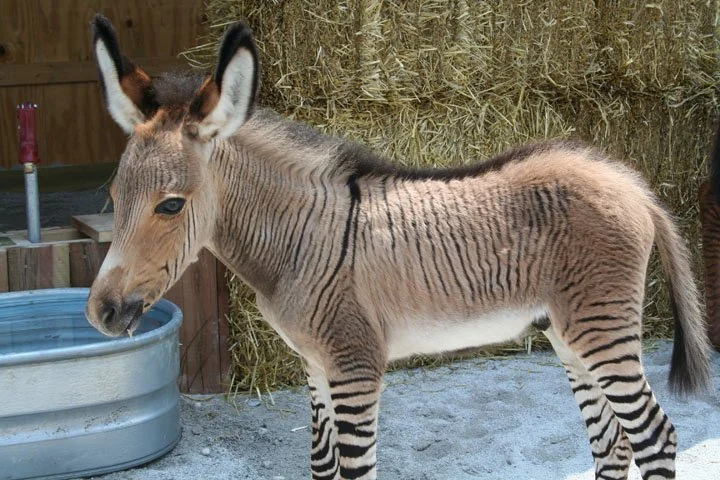
When Clare Staples, founder of Skydog Ranch, walked into a Texas auction house, her mission was simple: look for horses in need of saving. But as she carefully scanned the pens, something unusual caught her attention — a tiny baby standing all alone. At first, it was hard to believe what she was seeing. The little one had the long ears of a donkey but the distinctive stripes of a zebra on his legs. He was no ordinary animal. This baby, later named Zebedee, was only a couple of weeks old. He had already endured something no newborn should face — being separated from his mother much too soon. Alone in the pen, frightened, and branded with an auction sticker on his back, he seemed unsure of where he belonged. To make matters worse, he was about to be sold into a life where his future would almost certainly be grim. Many animals auctioned that day were headed toward trophy hunting operations or other fates just as tragic. Clare could see the fear in his eyes and the innocence in his trembling stance. In that moment, she knew she couldn’t walk away. “He touched my heart,” she later said. “I couldn’t let such a young and special little soul fall into the wrong hands.” The Rescue That Changed Everything Determined to give Zebedee a chance, Clare pulled every string she could. Bidding wars in such auction houses are often unpredictable, and the risks are high. But, almost miraculously, she was able to rescue him. The little zonkey’s fate shifted that very day. Instead of being sold to someone who saw him only as a commodity, he was now headed to Skydog Ranch, a sanctuary that specializes in giving second chances to wild and at-risk equines. The drive to his new home was long, and Zebedee stayed quiet most of the way, likely exhausted from the stress of the auction. He was so young that he still needed bottle-feeding, and every stop along the journey was a reminder of how fragile his life was. Clare knew this baby had survived only by chance and that it was now her responsibility to make sure he thrived. When they finally reached the sanctuary, Zebedee stepped onto soft grass for the first time since his separation from his mother. Wide-eyed but cautious, he began to explore. It was a brand-new chapter — one filled with hope. A New Family For A Lonely Baby At Skydog Ranch, Zebedee wasn’t just given food and shelter — he was given a family. Clare introduced him to Mabel, a gentle donkey who had recently been rescued, and Snowball, a one-eyed miniature pony with a big heart. To everyone’s surprise, the trio bonded almost immediately. For little Zebedee, who longed for the comfort of a mother figure, Mabel became that anchor. He even tried to nurse from her, instinctively recognizing her as his new mom. While he still required bottle-feeding from the sanctuary staff, having Mabel’s constant presence gave him a sense of security he desperately needed. Snowball, too, took on the role of protective big brother, and soon the three were inseparable. Watching the once-lonely baby settle into his newfound family was nothing short of heartwarming. He began to show glimpses of his playful side, kicking up his heels and testing out little gallops in the pasture. Then came the moment that melted everyone’s hearts: Zebedee got the zoomies for the very first time. He ran in fast, joyous circles around Mabel and Snowball, brimming with life and happiness. Clare described it as one of the most beautiful moments she had ever witnessed. “He will grow up knowing nothing but love and care,” she said, smiling as she watched him race across the field with pure delight. A Future Filled With Love And Possibility Zebedee’s journey is more than just the story of a rescued baby animal. It’s a reminder of how fragile life can be and how compassion has the power to completely alter a destiny. From a frightened, abandoned baby in an auction pen to a joyful youngster surrounded by love, Zebedee embodies hope. At Skydog Ranch, his future is secure. He will never know the cruelty of trophy hunting or the loneliness of being treated as property. Instead, he will grow up under the watchful eyes of caregivers who adore him and animal companions who accept him as one of their own. For Clare and her team, Zebedee’s rescue also highlighted the urgent need for awareness about what happens in auction houses across the country. Countless animals pass through them every day, many with equally heartbreaking stories. While not every animal can be saved, Zebedee stands as proof of what can happen when people step in and choose compassion. His story has since reached thousands online, inspiring people worldwide with his resilience and charm. Pictures of him running joyfully beside his adoptive family have spread far beyond the sanctuary’s fences, sparking conversations about the importance of sanctuaries and the protection of rare hybrids like him. Zebedee may not understand just how unique he is, but he doesn’t need to. What matters is that he is safe, loved, and free to grow into the beautiful, one-of-a-kind creature he was always meant to be. His days are now filled with warmth, companionship, and endless fields to explore — a life that once seemed impossible but is now his reality.

A Rare Baby Zonkey’s Journey From Auction House To Sanctuary Love Read More »

Raisin the Fruit Bat: From Lab Life to Living Her Best Retirement

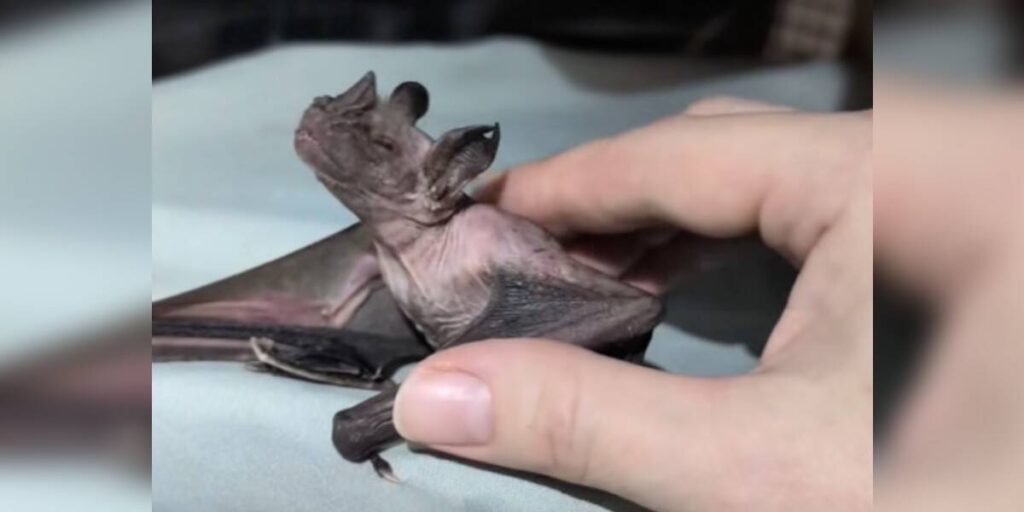
Not many animals get to celebrate a long, happy retirement after spending their early years inside a research lab. But Raisin, a Jamaican fruit bat, is one of the lucky ones. At nearly 20 years old, she’s not just surviving — she’s thriving. Thanks to the loving team at Bat World Sanctuary, Raisin has transformed from a lab animal into a lively, affectionate bat who now enjoys massages, fresh fruit, and cozy naps in hammocks. From Research Facility to Sanctuary Life Raisin’s story began in the early 2000s, when she was born and raised in a laboratory. Like many animals used in research, her early life was marked by confinement and uncertainty. But in 2005, her story changed forever. The facility where Raisin lived decided to retire several bats, handing them over to Bat World Sanctuary — a safe haven in Texas dedicated to caring for displaced, injured, and retired bats. Amanda Lollar, the sanctuary’s president, still remembers those days clearly. “We are always grateful when labs reach out to us to retire their bats so we can continue to give them a good home,” she said. Though no one knows the full extent of Raisin’s lab experiences, the team was determined to ensure her retirement years would be the complete opposite — full of enrichment, good food, and gentle care. A Social Senior With Endless Energy Today, Raisin has blossomed into one of the sanctuary’s most beloved residents. Even though she’s technically a “senior citizen” by bat standards, she shows no signs of slowing down when it comes to enjoying life. “She’s a little bit of a senior citizen at this point, but that certainly doesn’t slow her down,” said Natalie Perez, vice president of Bat World Sanctuary. Raisin now lives with other elderly Jamaican fruit bats in a special enclosure designed with their needs in mind. Since she can’t fly anymore, food, water, and toys are kept within easy reach. Enrichment activities keep her mind active, while her favorite thing — fresh fruit like papaya and bananas — brings her joy each day. And despite her age, Raisin has a playful streak. Staff often joke that during her daily jojoba oil massages (used to keep her skin healthy after losing fur with age), she transforms into a giddy pup. She wiggles, crawls, and enjoys every second of the attention. The Secret to a Long Bat Life In the wild, Jamaican fruit bats are reported to live around 10 years. Raisin has already doubled that expectation, a milestone made possible by attentive veterinary care, proper nutrition, and a calm, social environment. Amanda Lollar notes that sanctuary bats often live far longer than their wild counterparts. “Free-tail bats are reported to live 10 to 12 years in the wild, but we have had one that lived to 15 and another to 18,” she explained. The difference is clear: in labs or harsh wild conditions, bats face stress, predators, and limited diets. At Bat World Sanctuary, they’re treated with compassion, medical support, and opportunities to engage in natural behaviors. For Raisin, this has meant not just a longer life, but a better quality of life. Her caretakers also manage age-related challenges. Alongside massages, Raisin receives arthritis medication to ease her movements, and soft hammocks are available for her to rest comfortably whenever she pleases. A Symbol of Compassion and Second Chances Raisin’s journey is a reminder of what’s possible when animals are given a chance to live with dignity. She went from being a nameless research subject to a cherished individual whose quirks and preferences are celebrated. Perez explains: “We try to let our bats just be bats. We don’t really take them out or handle them … Raisin is a little bit of the exception to that because she is very social.” Indeed, Raisin’s love for interaction sets her apart. She thrives when her caregivers spend time with her, and her trust in humans shows just how far she’s come since leaving the lab. If baby Raisin could have imagined her future, she probably wouldn’t have believed it: lounging in hammocks, snacking on bananas, surrounded by other gentle fruit bats, and receiving regular spa-like treatments. Yet, thanks to the sanctuary, that’s exactly her reality. Her story highlights an important truth — no matter where animals come from, they all deserve care, compassion, and a chance at happiness. Raisin’s long, joyful retirement is living proof that with proper love and attention, even animals who come from difficult beginnings can flourish. She may be small, but her story carries a big message: all creatures deserve respect and kindness. Now, every day for Raisin is a celebration of life — filled with fruit, comfort, and plenty of massages. For the team at Bat World Sanctuary, watching her thrive is the greatest reward. As Perez put it best: “She’s enjoying her retirement to the fullest.” And judging by Raisin’s daily excitement, she’s not just living — she’s loving every moment.

Raisin the Fruit Bat: From Lab Life to Living Her Best Retirement Read More »

Camper Wakes To Find Giant Spider Waiting Outside His Tent — And Handles It Like a Pro

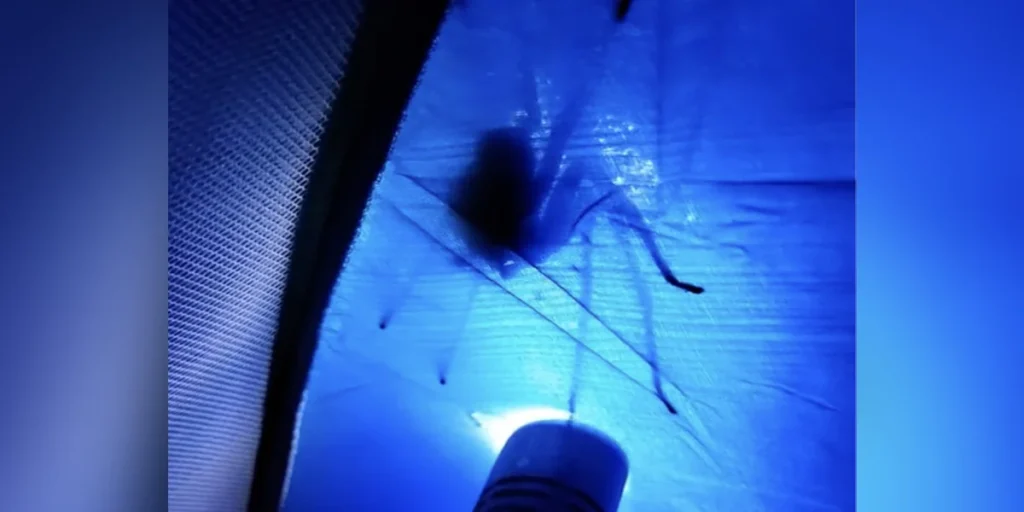
A Camping Trip Above the Clouds For nature lovers, few experiences rival the feeling of reaching a mountain summit after a long day’s climb. For Brazilian hiker and photographer Bruno Roos, that moment came during a challenging trip up the trails of Mestre Álvaro, a towering mountain near Vitória in Brazil’s Espírito Santo state. Together with a group of close friends, Bruno spent the day trekking through dense forest, navigating narrow trails, and pushing his body to its limits. By the time they reached the top, the exhaustion was quickly replaced with awe. At the summit, the group was greeted with a view that felt almost otherworldly — an endless sea of clouds stretched out beneath them. The sky, painted with shades of gold and orange, seemed within arm’s reach. For Bruno, every drop of sweat and every aching muscle was worth it. “All the effort was worth it when we saw the view above the clouds,” he later shared. It was the kind of reward that hikers dream about, and yet, this trip had another surprise in store — one that Bruno could never have predicted. A Strange Shadow at Dawn That night, the group set up camp on the mountaintop, their tents perched above the clouds. The cool mountain air and the quiet of the wilderness offered a sense of peace. As the night stretched on, the forest hummed with the sounds of nocturnal creatures, a reminder that even in moments of solitude, nature was alive and thriving around them. Before dawn, Bruno stirred awake. Always eager to capture the beauty of a sunrise, he grabbed his flashlight inside the tent to search for his phone. The faint beam of light cut through the darkness, bouncing off the fabric walls of the tent. That’s when he noticed something unusual — a shadow, large and distinct, stretched across the canvas. At first, he thought it might be a branch or some random object casting the shape. But as he focused, the outline became clear. Long legs. A wide body. It wasn’t an object at all — it was a spider. A very large spider. For many people, this discovery would have sparked fear or even panic. Being so close to a spider of that size, especially in the dim pre-dawn light, could have easily sent a camper scrambling. But Bruno, calm and deeply connected to nature, felt something different. He wasn’t afraid. Instead, he was intrigued. Meeting a Giant Visitor When the sun rose a little higher and the light became clearer, Bruno got a proper look at his unexpected guest. The spider was a Brazilian wandering spider, one of the most famous species in South America, known for both its size and striking appearance. This particular one stretched to an impressive 7 inches across — a creature that demanded attention simply by existing. Instead of reacting with fear, Bruno approached the situation with respect. He understood that this spider wasn’t out to harm him. She was simply another resident of the mountain, living her life in the untouched forest. “I wasn’t afraid,” he explained. “On the contrary, I like contact with nature.” Still, he didn’t want to accidentally harm her by stepping out of his tent or moving his gear. So, thinking quickly, Bruno gently coaxed the spider onto a stick. With patience and care, he carried her to a safer spot nearby where she could continue her morning undisturbed. For him, the act wasn’t about removing a nuisance — it was about ensuring both he and the spider could coexist peacefully in the same space. Bruno knew he had just encountered something rare. To find a spider of that size in such an environment meant she had been living undisturbed for many years. “Being that size, she’s a very old spider,” he said, admiring her resilience. It was a living testament to the richness of life hidden deep within the mountain’s forest. Nature’s Reward For Bruno, the encounter with the giant spider became just as meaningful as the breathtaking sunrise or the sweeping views of the clouds below. Hiking to the top of Mestre Álvaro was already a gift, but the spider added another layer of wonder — a reminder that the wild has its own stories, often waiting quietly for those willing to seek them out. “On that trip, nature gave me more than I expected,” Bruno reflected. “I love animals. I take great care with nature, and it always reciprocates.” His philosophy of respect and coexistence shaped how he experienced the moment. Where others might have left frightened or frustrated, Bruno left with gratitude. In many ways, the spider embodied the spirit of the mountain itself — ancient, enduring, and quietly powerful. Bruno understood that hiking isn’t only about reaching the top or snapping photos for memory’s sake. It’s about the encounters along the way, the quiet lessons nature teaches, and the humility of being reminded that humans are just visitors in a much larger world. As the group packed up their tents and began their descent, Bruno carried with him not just the images of a mountain sunrise but the memory of meeting one of nature’s most remarkable creatures. The experience reaffirmed his love for the wilderness and his belief that when treated with care, nature responds with unforgettable gifts.

Camper Wakes To Find Giant Spider Waiting Outside His Tent — And Handles It Like a Pro Read More »

Woman Finds Tiny, Pink Baby In Her Yard — Then Holds Her Breath For A Miracle

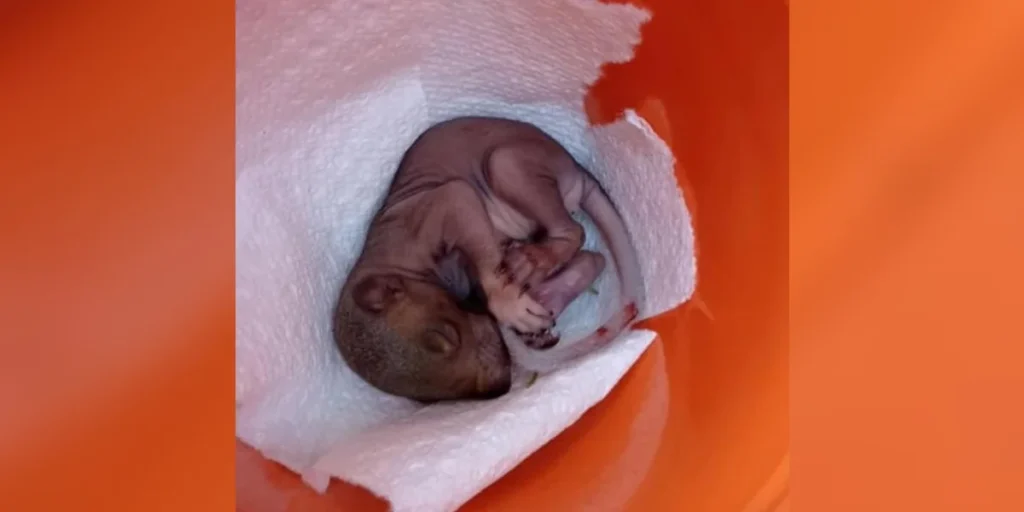
Sometimes the most extraordinary rescues begin with an ordinary day. For Kim, a caring woman who stumbled upon a shocking sight in her yard, that day arrived in the form of a fragile, hairless baby squirrel clinging to life. What happened next proved that a little compassion — and a lot of quick thinking — can create the perfect ending. A Startling Discovery While spending time outside, Kim noticed something unusual in the grass. Upon closer inspection, she realized it was a newborn squirrel, so young that his eyes hadn’t even opened. His delicate, pink skin was bare of fur, leaving him completely exposed to the elements. Recognizing the seriousness of the situation, Kim immediately reached out to WEST Wildlife Rehab (WWR) for advice. She wanted to do the right thing but knew the best outcome would be reuniting the little one with his mother. A Clever Plan to Reunite Mother and Baby Before WWR could even suggest next steps, Kim had already taken initiative. She gently placed the baby in a bucket and secured it to the tree where the nest was located, lifting him off the ground to keep him safe. This small but thoughtful action gave the mother squirrel the best possible chance of finding and retrieving her baby. The rehab team, though relieved by Kim’s quick thinking, was still worried. They explained that newborn squirrels cannot regulate their body temperature, even on warm days. If the baby became too cold, his mother might reject him instead of bringing him back to the nest. To prevent this, WWR advised Kim to warm the baby using a sock filled with microwaved rice — a simple but effective way to restore his body heat without direct handling. The Miracle Moment Kim followed the instructions and hurried back outside, rice sock in hand. But when she arrived, her heart leapt — the sock wasn’t needed anymore. The baby was gone. His mother had already returned, carefully carrying him back up the tree to safety. In just a short time, the reunion was complete. The tiny pink squirrel was no longer alone or vulnerable — he was back where he belonged, nestled in the warmth of his family’s nest. Why Reunions Matter For the team at WWR, this was a story that highlighted the importance of community involvement in wildlife rescue. While rehabilitation centers do incredible work, there are far more cases than any single organization can handle. Helping animals get back to their natural families when possible is often the most successful — and least disruptive — solution. “If you find a baby animal that looks healthy and uninjured, don’t panic,” WWR explained. “Call your local rehabber. Many times, they can guide you through safe steps to encourage a reunion, just like Kim did.” By understanding that mothers rarely abandon their young and often return if given the opportunity, everyday people can make a huge difference in wildlife survival rates. Not all rescues go according to plan, but this little squirrel’s tale was a shining exception. Thanks to Kim’s fast action and WWR’s advice, a helpless baby was returned to his rightful place without needing human intervention beyond a helping hand.

Woman Finds Tiny, Pink Baby In Her Yard — Then Holds Her Breath For A Miracle Read More »

Teen Tubing Down River Reaches Hand Into Water — And A Week-Old Baby Clings On

A quiet summer day on the Cowichan River in Canada turned into an unforgettable rescue mission for the Belanger family. What began as a peaceful tubing trip soon became a life-changing encounter with one of nature’s most vulnerable creatures. A Cry for Help on the River As the family floated downstream, Liz Belanger was startled by faint cries echoing over the rapids. The sound was unlike any bird or insect she’d ever heard before. At first, she thought it might have been her imagination — until her 16-year-old son, Connor, drifted past the same spot and spotted the source. Struggling in the water was a tiny, helpless beaver kit, no more than a week old. The baby’s small body was being pulled by the current, her cries barely rising above the rush of water. Connor acted instantly. Reaching into the chilly river, he cupped his hand beneath the fragile kit. To his amazement, the baby instinctively latched onto his fingers, clinging tightly as if she knew he was her only chance of survival. Gently pulling her to his chest, Connor cradled the trembling animal against his body for warmth. “She trusted him immediately,” Liz recalled. “She just curled into his arms and closed her eyes. It was as if she knew she was finally safe.” A Family Protects Their Unexpected Passenger For the next several hours, the Belanger family floated downriver with their new companion. Connor, fiercely protective, refused to let his mom hold the kit at first. He wanted to make sure she stayed calm, warm, and safe in his embrace. As the tubing trip ended, the family carried the baby — later named Timber — back to their vehicle. Liz described how Timber nestled into her lap as she drove, occasionally making tiny nursing sounds as if she longed for her mother’s comfort. “She was the most adorable little creature I’d ever seen,” Liz said. “She would peek her eyes open, then snuggle right back down, completely trusting us.” After about four hours of care, the family transferred Timber to the North Island Wildlife Recovery Association (NIWRA), a sanctuary experienced in raising and rehabilitating orphaned wildlife. Timber’s Tough Beginning Upon arrival, the rescue team quickly realized just how close Timber had come to death. “She was cold, dehydrated, and utterly exhausted,” explained Joanna Smith of NIWRA. “At that age, beaver kits are entirely dependent on their mothers. Without the Belanger family stepping in, she likely wouldn’t have survived.” Weighing just a few ounces, Timber required around-the-clock monitoring and gentle rehydration. For the first few days, her condition was touch-and-go. But her determined spirit began to shine through almost immediately. “Even so young, Timber had this incredible presence,” Smith said. “She’s confident, curious, and absolutely determined to survive.” A Hopeful Future for Timber Baby beavers typically remain with their mothers for more than a year, learning essential survival skills such as swimming efficiently, foraging, and building dams. Because Timber was orphaned so early, NIWRA will provide her with surrogate care until she’s strong enough to thrive on her own. Her caregivers are already seeing her adventurous side blossom. She explores her surroundings with determination, nibbling on twigs and testing her tiny paws in shallow pools of water. Each day she grows stronger, her future looking brighter thanks to the quick-thinking actions of one teenage boy and his family. When the time is right, Timber will be released back into the wild — most likely in the same region where she was rescued, so she can return to her natural habitat. Until then, she’ll continue to receive expert care, giving her the chance at life she nearly lost in the river. What could have been a tragic end became a story of hope because one teenager listened to his instincts and reached out. Timber’s rescue is a reminder of how closely humans and wildlife are connected, and how small acts of compassion can change the course of a life forever. Connor may have simply been tubing down the Cowichan River, but to Timber, he became a hero — the difference between despair and survival.

Teen Tubing Down River Reaches Hand Into Water — And A Week-Old Baby Clings On Read More »

A Feathered Surprise: Woman Finds Big Pink Feather In Her Yard

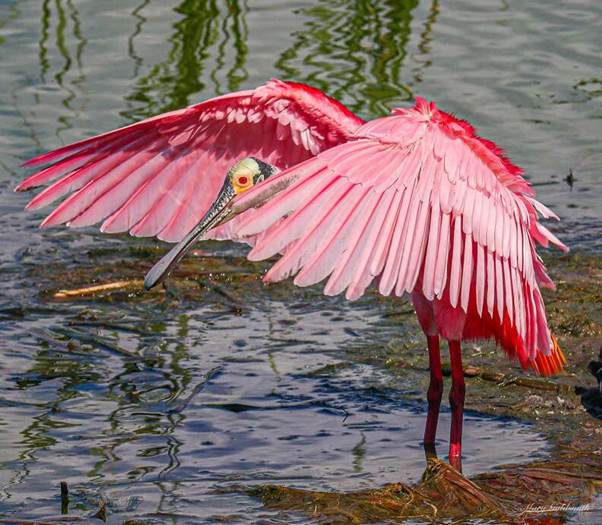
A Strange Discovery When Mary Goldsmith stepped into her yard in Port Aransas, Texas, she expected nothing more than a quiet day outdoors. Instead, she witnessed something unusual — a large pink feather drifting gracefully down from the sky. At first, she was puzzled. Texas has many bird species, but none she knew of had feathers so strikingly pink. Having recently moved to the area, Mary felt both confused and intrigued. She carefully picked up the feather, studied its unusual hue, and went inside to research what kind of bird could possibly have left it behind. That curiosity led her to the discovery of a bird she had never seen before: the roseate spoonbill. Meeting the Roseate Spoonbill The roseate spoonbill is one of nature’s most remarkable birds, easily recognizable for its brilliant pink feathers and distinctive green, spoon-shaped bill. When Mary finally saw one in person, she was left speechless. “I was in awe the first time I saw one in person,” Mary recalled. “Not only is it large and pink, but also has a green [spoon-shaped bill] which it swings back and forth in the water to trap food. It is a very unusual bird.” For bird enthusiasts, spotting a spoonbill is always exciting, but for Mary, it was a revelation. She soon learned that not only were they common in the area, but the roseate spoonbill is actually the official bird of Port Aransas. What began as a random feather in her yard quickly blossomed into a new appreciation for the unique wildlife of her coastal town. A Birding Center Surprise Since that first encounter, Mary has spotted roseate spoonbills many times while exploring her new surroundings. However, her most memorable experience happened at the Leonabelle Turnbull Birding Center, a popular spot for wildlife watchers in the region. One afternoon, as she scanned the wetlands with her camera, a particularly vibrant roseate spoonbill caught her attention. Unlike the lighter pink birds she had seen before, this one glowed with intense shades of pink, orange, and yellow. “This particular bird was one of the most vibrant I have seen,” Mary said. “During breeding season, the roseate spoonbill’s feathers become a deeper pink with accents of orange and yellow. This bird was on fire with breeding colors!” The dazzling plumage wasn’t the only thing that made the encounter unforgettable. A Natural Performer As Mary raised her camera, the spoonbill seemed to notice. Instead of flying away or ignoring her, the bird stayed close, tilting his head, stretching his wings, and striking a series of almost playful poses. “It stood right in front of me going through different poses and seemed to respond to the click of the camera,” she explained. It was as though the spoonbill understood he was the star of the show and delighted in showing off his beauty. For Mary, a passionate photographer, the interaction felt magical — almost like a two-way connection between human and bird. “The bird seemed to know he was a sight to see, and he had a blast striking pose after pose,” she said. A Newfound Fascination Even though she now sees spoonbills regularly, Mary never tires of their beauty. Each one seems to have its own personality, and encounters like the one at the birding center remind her how much wonder can be found in nature. “Despite seeing roseate spoonbills all the time, I was definitely amazed by this particular one and can’t wait to see what other surprises they have in store for me,” Mary said. Her story is a reminder that sometimes the most unexpected discoveries — like a feather drifting into your yard — can spark new passions and a deeper appreciation for the natural world. About the Roseate Spoonbill For those unfamiliar, the roseate spoonbill (Platalea ajaja) is a wading bird found in coastal regions of the Americas. Its vivid pink feathers come from the crustaceans and other aquatic invertebrates it eats, which contain pigments called carotenoids. During the breeding season, their plumage becomes even more dramatic, with brilliant highlights of scarlet, orange, and yellow. Combined with their unique spoon-shaped bills, these birds are both bizarre and breathtaking — a true testament to the diversity of life in wetlands. Though once threatened by hunting and habitat loss, conservation efforts have helped the species recover in many areas. Today, Port Aransas residents like Mary can enjoy their presence year-round, especially in local birding centers and marshlands. What began with a single pink feather floating into her yard has grown into an ongoing fascination for Mary Goldsmith. Each time she sees a roseate spoonbill, she feels a renewed sense of awe and connection to her new home. From their unusual bills to their radiant feathers, these birds serve as living works of art — a reminder that beauty often appears when you least expect it. For Mary, one thing is certain: the roseate spoonbill has turned her everyday surroundings into a stage for extraordinary encounters.

A Feathered Surprise: Woman Finds Big Pink Feather In Her Yard Read More »

Conservationists Spot Gemsbok With a Crown of Spider Webs

When conservationist and wildlife photographer Dr. Jess Isden trekked across the Central Kalahari Game Reserve in Botswana, she expected to encounter the usual wonders of the desert: vast golden plains, thorny acacia trees, and the iconic silhouettes of gemsbok antelopes moving gracefully across the horizon. But on this particular trip, something unusual caught her attention. One striking male gemsbok stood out from the rest. His tall, pointed horns — usually sharp and gleaming — were covered in a strange, glistening mass of spider webs. At first glance, it looked like delicate silk threads catching the sunlight, but as Dr. Isden drew closer, she realized that the webs were not just loose strands. They were dense, layered, and home to several small spiders that had made this antelope’s horns their permanent residence. A Rare and Unexpected Discovery While gemsbok are often seen brushing through shrubs and thorny vegetation, occasionally picking up bits of debris or even thin spider strands, this particular sight was something completely out of the ordinary. “We’ve seen gemsbok with light webbing before, but nothing close to this level,” Dr. Isden shared. The tangled crown looked as though it had been building up for days, forming an almost regal headpiece that gave the animal a surreal, mystical appearance. Most observers would assume that the antelope would quickly rid himself of such an adornment by rubbing against trees or rocks. Yet, when Dr. Isden and her team returned days later, they were amazed to see the very same gemsbok still wearing his elaborate crown, perfectly intact. A Question of Tolerance or Choice This raised an intriguing question: was the webbing simply an accident, or was the gemsbok deliberately tolerating it? Typically, large herbivores like gemsbok are quick to shake off irritants or scrape their horns against rough surfaces to free themselves from anything unusual. But in this case, the male showed no effort to remove the thick webbing. Dr. Isden speculated that the antelope may have chosen to leave the webs alone, suggesting a degree of tolerance — or perhaps even an understanding that the arrangement provided some kind of benefit. Could It Be a Symbiotic Relationship? When Dr. Isden shared photos of the horned spectacle online, people began buzzing with theories. Many believed the antelope had simply blundered into a large web, picking it up by accident. But others wondered if something deeper was at play. Some suggested a possible symbiotic relationship between the gemsbok and the spiders. Spiders living on the horns would have access to a steady stream of insects drawn to the large animal’s body. In return, they might help the gemsbok by reducing the number of biting flies and parasites that often pester antelopes in the wild. One commenter even joked that the gemsbok had found his own natural “insect repellent.” Another pointed out that spiders often thrive in places where food is abundant, and the horns may have provided both a safe home and a near-constant buffet. Gemsbok: Masters of Survival in Harsh Environments To fully appreciate this unusual discovery, it helps to understand the gemsbok itself. Known for their long, spear-like horns and striking black-and-white facial markings, gemsbok are one of the most iconic antelope species of the African savannah. They are superbly adapted to the harsh desert conditions of the Kalahari, able to survive extreme heat and long periods without water by drawing moisture from the plants they eat. Male gemsbok use their horns for both defense and dominance, often engaging in sparring matches with rivals. For such an important feature of their survival, the idea that one male allowed his horns to host spiders is remarkable. It suggests that the animal either wasn’t inconvenienced by the webs or, perhaps, even benefitted from them in subtle ways. Nature’s Unexpected Partnerships The natural world is filled with surprising collaborations between species. Birds like oxpeckers famously perch on large mammals, feeding on ticks while keeping their hosts relatively parasite-free. Cleaner fish remove debris from the mouths of larger fish, helping both species thrive. Could this gemsbok and his eight-legged companions be another example of such cooperation? While it may not have been intentional, the relationship seemed to work. The spiders had a secure, elevated home with endless food opportunities, while the gemsbok likely enjoyed fewer biting pests around his face and body. A Crown Fit for a King For days, the gemsbok roamed the savannah with his unusual crown, completely unbothered by the extra weight or appearance. To the conservationists watching, it was a breathtaking reminder of how adaptable and unpredictable nature can be. What began as a curious observation turned into a fascinating glimpse into the possibilities of interspecies tolerance. Whether by accident or design, the gemsbok wore his silken crown with a quiet dignity — while his tiny passengers thrived in their unusual mobile fortress. As Dr. Isden put it, “The spiders seemed quite content, and the gemsbok didn’t appear to mind at all. In their own way, they made the perfect pair.”

Conservationists Spot Gemsbok With a Crown of Spider Webs Read More »

Kayaker Does A Double Take When He Spots An Injured Animal In The Reeds

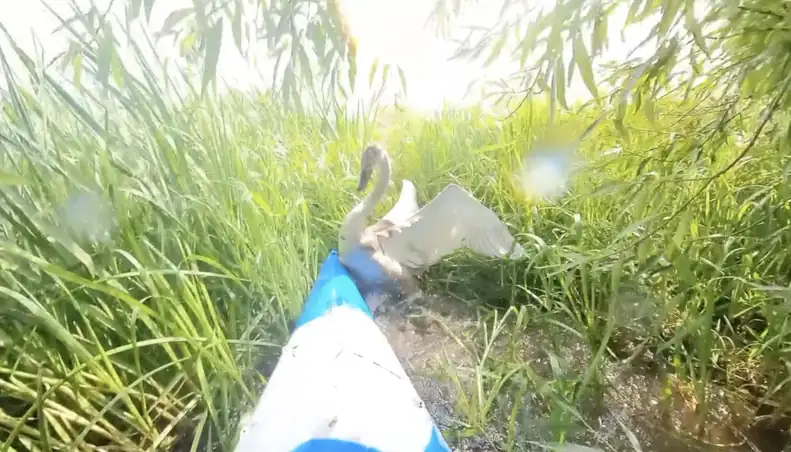
On a warm afternoon in Anne Arundel County, Maryland, a kayaker gently paddled along the quiet bends of the South River. The water shimmered under the sun, framed by tall reeds swaying in the breeze. But suddenly, something unusual broke the peaceful scene — a pair of piercing eyes peering out from the tangled green. At first glance, the kayaker thought he was imagining it. But as he steered closer, he realized he was looking straight at a wounded bald eagle, the very bird that rescuers had been desperately searching for all day. A Rescue That Nearly Slipped Away Earlier that morning, wildlife advocate Donna Cole had been alerted about a bald eagle struck by a car on a nearby highway. Police officers had quickly stepped in, rerouting traffic and keeping the distressed bird from further harm as he staggered toward the river. By the time Cole arrived, however, the eagle had disappeared into dense woodland. “It was a deeply wooded area with thick brambles and thorny bushes. There was no way to safely reach him,” Cole explained. Recognizing the challenge, she shifted strategies and sought help on the water instead. With the support of John Flood, a board member of the Arundel Rivers Federation, Cole took to the river. They searched for hours in the sweltering heat, but the eagle stayed out of reach. Exhausted and empty-handed, they had to temporarily retreat. An Unexpected Ally On The Water That’s when fate intervened. A kayaker, gliding across the opposite side of the river, noticed the injured eagle resting weakly among the reeds. He quickly reported the sighting, giving Cole a second chance. “It was like two miracles in one,” Cole recalled. “First, the police officer found the eagle, and then the kayaker spotted him again. Without them, we never would’ve had the chance.” Rushing back with renewed determination, Cole and Flood met the kayaker at the site. Navigating shallow waters, Flood maneuvered his boat close while Cole leapt into knee-deep mud. Brambles scratched her arms, and in the scramble, she even lost a shoe — but none of that mattered. With steady hands, she finally secured the eagle. Safe At Last The majestic bird, though battered, was alive. Carefully placed in a transport box, he was rushed to the Owl Moon Raptor Center, where he began a long recovery journey under specialized care. For Cole, the emotional weight of the rescue was overwhelming. “This was the longest, the most impossible rescue I’ve ever done,” she admitted. “The relief I felt when I finally held that eagle … it’s a moment I’ll never forget.” Why Every Eagle Matters Bald eagles, once endangered due to habitat loss and pesticide poisoning, have made a remarkable comeback across the U.S. thanks to decades of conservation work. Still, they face modern threats from vehicle collisions, power lines, and human development. Each rescue — like this one — is more than saving a single bird; it’s helping protect a symbol of resilience and freedom. Thanks to the quick-thinking kayaker, the dedication of police officers, and the tireless efforts of volunteers like Cole and Flood, one eagle has a second chance at soaring over Maryland’s skies again

Kayaker Does A Double Take When He Spots An Injured Animal In The Reeds Read More »