Lucas Anderson

A Feathered Surprise: Woman Finds Big Pink Feather In Her Yard

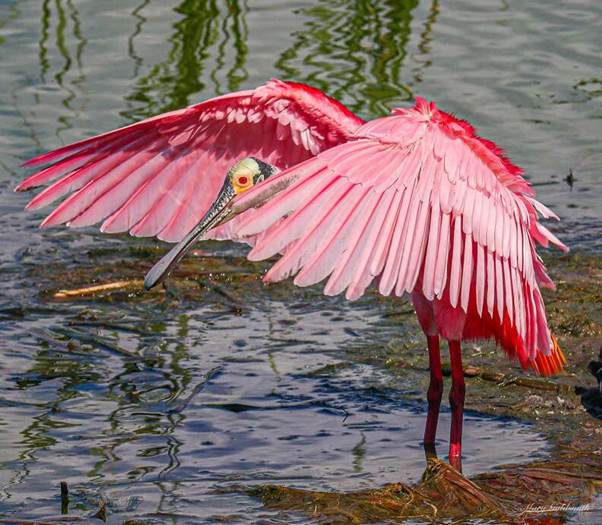
A Strange Discovery When Mary Goldsmith stepped into her yard in Port Aransas, Texas, she expected nothing more than a quiet day outdoors. Instead, she witnessed something unusual — a large pink feather drifting gracefully down from the sky. At first, she was puzzled. Texas has many bird species, but none she knew of had feathers so strikingly pink. Having recently moved to the area, Mary felt both confused and intrigued. She carefully picked up the feather, studied its unusual hue, and went inside to research what kind of bird could possibly have left it behind. That curiosity led her to the discovery of a bird she had never seen before: the roseate spoonbill. Meeting the Roseate Spoonbill The roseate spoonbill is one of nature’s most remarkable birds, easily recognizable for its brilliant pink feathers and distinctive green, spoon-shaped bill. When Mary finally saw one in person, she was left speechless. “I was in awe the first time I saw one in person,” Mary recalled. “Not only is it large and pink, but also has a green [spoon-shaped bill] which it swings back and forth in the water to trap food. It is a very unusual bird.” For bird enthusiasts, spotting a spoonbill is always exciting, but for Mary, it was a revelation. She soon learned that not only were they common in the area, but the roseate spoonbill is actually the official bird of Port Aransas. What began as a random feather in her yard quickly blossomed into a new appreciation for the unique wildlife of her coastal town. A Birding Center Surprise Since that first encounter, Mary has spotted roseate spoonbills many times while exploring her new surroundings. However, her most memorable experience happened at the Leonabelle Turnbull Birding Center, a popular spot for wildlife watchers in the region. One afternoon, as she scanned the wetlands with her camera, a particularly vibrant roseate spoonbill caught her attention. Unlike the lighter pink birds she had seen before, this one glowed with intense shades of pink, orange, and yellow. “This particular bird was one of the most vibrant I have seen,” Mary said. “During breeding season, the roseate spoonbill’s feathers become a deeper pink with accents of orange and yellow. This bird was on fire with breeding colors!” The dazzling plumage wasn’t the only thing that made the encounter unforgettable. A Natural Performer As Mary raised her camera, the spoonbill seemed to notice. Instead of flying away or ignoring her, the bird stayed close, tilting his head, stretching his wings, and striking a series of almost playful poses. “It stood right in front of me going through different poses and seemed to respond to the click of the camera,” she explained. It was as though the spoonbill understood he was the star of the show and delighted in showing off his beauty. For Mary, a passionate photographer, the interaction felt magical — almost like a two-way connection between human and bird. “The bird seemed to know he was a sight to see, and he had a blast striking pose after pose,” she said. A Newfound Fascination Even though she now sees spoonbills regularly, Mary never tires of their beauty. Each one seems to have its own personality, and encounters like the one at the birding center remind her how much wonder can be found in nature. “Despite seeing roseate spoonbills all the time, I was definitely amazed by this particular one and can’t wait to see what other surprises they have in store for me,” Mary said. Her story is a reminder that sometimes the most unexpected discoveries — like a feather drifting into your yard — can spark new passions and a deeper appreciation for the natural world. About the Roseate Spoonbill For those unfamiliar, the roseate spoonbill (Platalea ajaja) is a wading bird found in coastal regions of the Americas. Its vivid pink feathers come from the crustaceans and other aquatic invertebrates it eats, which contain pigments called carotenoids. During the breeding season, their plumage becomes even more dramatic, with brilliant highlights of scarlet, orange, and yellow. Combined with their unique spoon-shaped bills, these birds are both bizarre and breathtaking — a true testament to the diversity of life in wetlands. Though once threatened by hunting and habitat loss, conservation efforts have helped the species recover in many areas. Today, Port Aransas residents like Mary can enjoy their presence year-round, especially in local birding centers and marshlands. What began with a single pink feather floating into her yard has grown into an ongoing fascination for Mary Goldsmith. Each time she sees a roseate spoonbill, she feels a renewed sense of awe and connection to her new home. From their unusual bills to their radiant feathers, these birds serve as living works of art — a reminder that beauty often appears when you least expect it. For Mary, one thing is certain: the roseate spoonbill has turned her everyday surroundings into a stage for extraordinary encounters.

A Feathered Surprise: Woman Finds Big Pink Feather In Her Yard Read More »
Baby Girl’s Second Chance: The Dog With a Backpack Full of Love

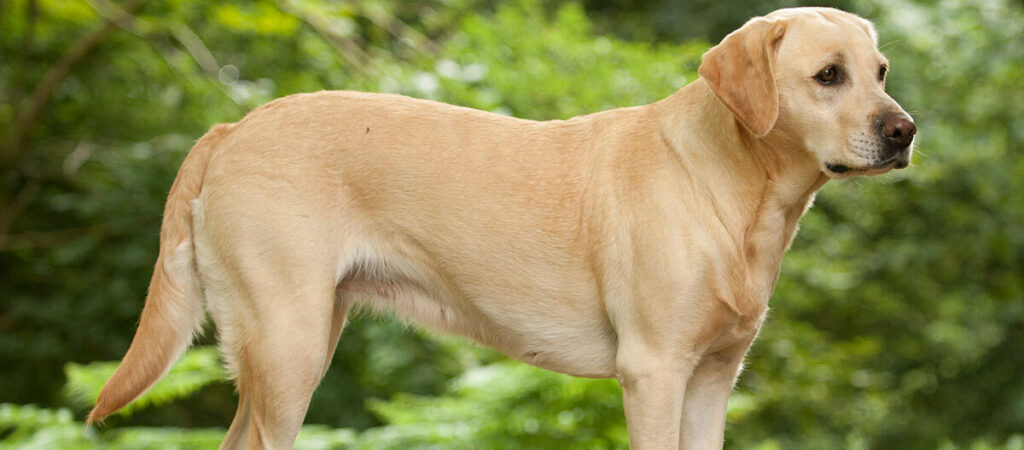
A Lonely Sight on a Cold Street In the quiet streets of Green Bay, Wisconsin, passersby noticed something unusual near a fire hydrant one chilly weekend. Sitting calmly on the grass was a tan dog named Baby Girl, her leash tied securely to the hydrant. At first glance, it looked as though her owner might return at any moment. But as time passed, the reality became heartbreakingly clear — Baby Girl had been left behind. It was Kylie Rose Engelhardt, a local resident, who first spotted the pup. Concerned by the sight, Kylie sat with Baby Girl for nearly an hour, gently stroking her fur and trying to keep her warm while waiting to see if anyone would come back for her. No one ever did. Beside Baby Girl sat a backpack filled with her favorite things: food, toys, treats, and even a note. It was clear that this was not an act of cruelty but one of desperation — a painful decision made by someone who loved her dearly yet could no longer provide for her. From the Sidewalk to Safety Realizing the dog had been abandoned, Kylie took action. She carefully brought Baby Girl to the Wisconsin Humane Society (WHS), ensuring she wouldn’t have to spend another night in the cold. The photo of Baby Girl tethered to the hydrant with her belongings quickly spread across social media, sparking sympathy and concern from animal lovers everywhere. Many wondered how such a sweet and well-cared-for dog could end up in this situation. At the shelter, staff confirmed that Baby Girl is a five-year-old dog full of affection and charm. According to WHS spokesperson Angela Speed, Baby Girl settled in quickly: “She is doing well and getting lots of TLC from our staff. She loves her walks, toys, and performs an adorable ‘sit’ for treats. She’s a happy and affectionate pup.” A Compassionate Message to Her Former Owner What touched people most about this story wasn’t just Baby Girl’s resilience, but also the shelter’s compassion toward her previous owner. Instead of shaming them, WHS released a heartfelt letter acknowledging the love that went into the decision. They pointed out the details that showed care: the carefully packed backpack, the secure leash tied in a safe, visible spot, and the fact that Baby Girl looked healthy and well-nourished. The message read, in part: “We see your love in the bag you packed with her favorite things. We see your love in how you placed her where she’d be quickly found.We’re so sorry you had to part with your best friend, and we want you to know she is safe and cared for.” By framing the act with empathy, WHS reminded the community that sometimes surrendering a pet comes from hardship, not neglect. The note left behind revealed the owner’s own medical struggles and challenges in life — proof that this was a decision made with Baby Girl’s well-being at heart. Preparing for a Brighter Future Baby Girl has now completed her mandatory “stray hold” and is preparing for adoption. In the meantime, she is enjoying daily walks, plenty of playtime, and lots of affection from shelter staff who have fallen in love with her gentle personality. Her story has already touched thousands online, and the shelter is confident that she’ll soon find a new family ready to give her the stability and love she deserves. For now, Baby Girl is safe, cherished, and eagerly awaiting her second chance. And thanks to both the compassion of a passerby and the empathy of a local shelter, her story has transformed from one of heartbreak to one of hope and healing. “Rest assured that she’s safe, she’s getting tons of attention from our team, and she’s on track to find her next loving family very soon,” WHS shared. “You can rest a little easier knowing your Baby Girl has a bright future ahead.” Baby Girl’s journey reminds us that the bond between people and their pets runs deep — even in the most difficult circumstances. Her former owner may not have been able to stay by her side, but they did everything possible to ensure she was found quickly and cared for. It also highlights the vital role shelters play in not only rescuing animals but also supporting pet parents who are struggling. Sometimes, showing compassion for owners is just as important as caring for the animals they leave behind. Baby Girl is more than just another adoption story — she’s a symbol of resilience, love, and the kindness of strangers who step in when an animal needs a helping hand.

Baby Girl’s Second Chance: The Dog With a Backpack Full of Love Read More »

Meet Max: The Shelter Cat Who Hands Out Hilarious “Smacks”

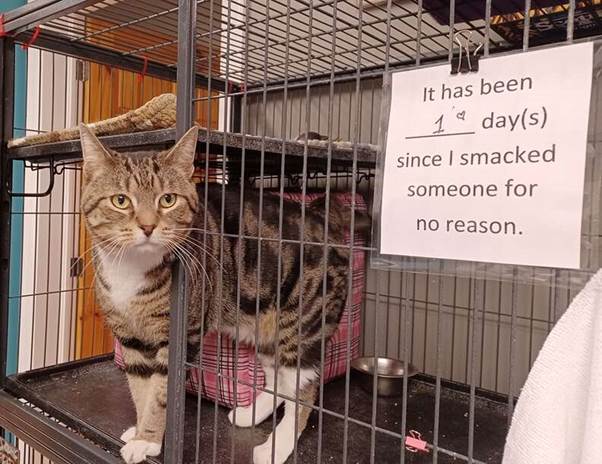
A Cat With Big Personality Every shelter has that one animal who instantly becomes a legend among staff and visitors. At the Oromocto and Area SPCA in New Brunswick, Canada, that title belongs to Max, a sassy senior cat who has quickly earned a reputation for his one-of-a-kind way of setting boundaries. When Max doesn’t like something — or when he feels someone isn’t listening to his cues — he doesn’t hesitate to make himself heard. Or rather, felt. “He’ll reach his arm right out through the cage and smack if he needs to,” said Tracy Marcotullio, shelter manager at the SPCA. It’s not done out of malice. Max isn’t mean-spirited — he’s just a cat who knows what he wants, and he’s not afraid to enforce the rules of his personal space. The Infamous “Smack Tracker” Max has only been at the shelter for a few weeks, but he’s already inspired one of the funniest traditions among the staff: his very own “smack tracker.” Each time Max goes a whole day without giving someone a playful swat, staff proudly update the sign on his cage to show how many “smack-free days” he has achieved. So far, his record stands at four days — though he recently reset his streak back to zero. “He’s sort of a cranky old man,” Marcotullio explained with a laugh. “If you don’t read his cues properly, then you’re getting smacked.” For the staff, Max’s antics are both amusing and endearing. In fact, they’ve leaned into the humor of it all, even creating commemorative pins for anyone who has the honor of being “smacked by Max.” Behind the Sass: A Sweet, Sensitive Cat While Max’s smacks have made him internet-famous, his caretakers know that deep down, he’s not a bad cat at all. Like many felines, Max can get overstimulated. Too much handling or too much commotion overwhelms him, and when he’s reached his limit, he lets people know the only way he knows how — with a firm paw tap. To keep him comfortable, the shelter has developed a routine tailored to his quirks. During cage cleanings, Max gets a break to roam around with other cats, which helps ease his stress. And of course, the staff always keep his favorite snacks nearby. “He’s a treat monster,” Marcotullio said. “The way to his heart is with canned food or Temptations treats.” Even so, nobody — not staff, volunteers, or visitors — is truly safe from a Max smack. And that’s part of his charm. What Kind of Home Does Max Need? Because of his strong personality, Max will do best in a home where his new family understands feline body language. He thrives when people respect his boundaries and give him the independence he craves. A quieter household, ideally without small children, would allow him to feel secure and avoid overstimulation. What Max really needs is someone who will appreciate his quirks rather than try to change them. He is affectionate on his own terms, and when he chooses to bond, it’s genuine and lasting. The staff believe that once Max finds the right match, he will blossom into a loving and loyal companion. Looking For His Forever Home Though Max has become a star at the shelter, staff members are eager for him to find a permanent home. As fun as his quirks are, they know he deserves a family who will appreciate his strong personality and give him the love and patience he needs. “As much as we’re having fun with it, we really want him to go to a forever home,” Marcotullio said. “He deserves to get out of here and find his people.” The attention Max has brought on social media has actually helped highlight other adoptable cats at the SPCA as well. Potential adopters who called about Max ended up learning about his feline friends, too — giving several other cats a chance at adoption. In that sense, Max isn’t just smacking people — he’s also helping his shelter buddies find homes. The Cat Who Smacks, But Loves Even More For now, Max remains at the shelter, dishing out smacks and soaking up treats while he waits for his perfect match. He may have a spicy streak, but to those who know him, that sass is paired with charm, intelligence, and a lot of love to give — once you learn his boundaries. Every pet has their quirks, and for Max, it just happens to be his signature move: the playful smack. And for the lucky family who adopts him, life is sure to be full of laughs, snacks, and just enough swats to keep everyone in line.

Meet Max: The Shelter Cat Who Hands Out Hilarious “Smacks” Read More »

Lost in the Shadows: How an Urban Explorer Saved a Dog Trapped in a Storm Drain

An Explorer’s Unexpected Discovery For most people, storm drains and abandoned canals are places to avoid. But for Michael Vargas, an urban explorer from Oakland, California, they are mysterious spaces full of history, forgotten stories, and art waiting to be documented. He has spent more than a decade venturing into tunnels, hidden passageways, and overlooked corners of cities. Normally, his adventures uncover graffiti, old relics, or architectural oddities. But one quiet day, while exploring a canal with his girlfriend, Vargas stumbled upon something that would change his life forever. They had paused briefly to admire a stretch of colorful graffiti when his girlfriend gasped: “Holy s—! A dog!” At first, Vargas thought she was joking. A dog? Here? Deep inside a concrete canal surrounded by steep walls and a network of storm drains? But when he looked closer, he saw a pair of frightened eyes staring back at him from the shadows. There, in a small side drain, was a little white dog — filthy, trembling, and clearly trapped. A Life Hanging by a Thread Vargas immediately felt his heart sink. “I thought, ‘I can’t leave this dog here. If we leave this dog, he’s dead,’” he later recalled. The pup was weak, confused, and visibly terrified. It was impossible to tell how long he had been stuck in that narrow, dark corner, but one thing was certain: without help, he wouldn’t survive much longer. Getting him out wouldn’t be easy. The space was cramped, slippery, and difficult to access. But Vargas and his girlfriend refused to walk away. For nearly an hour, they worked patiently to earn the dog’s trust. Vargas tried coaxing him with gentle words and small movements, doing his best not to startle him further. Slowly, inch by inch, the frightened pup began edging closer. Finally, Vargas managed to scoop him up. The little dog was safe. Rusty’s Road to Healing The first stop after the rescue was an animal hospital. Vargas and his girlfriend rushed the dog straight to the vet, knowing he desperately needed care. There, the vet discovered that the pup had multiple health issues requiring treatment. He was underweight, exhausted, and had likely endured more suffering before ending up in the drain. The veterinarian even speculated that the dog might have been abused at some point in his past. To make matters worse, there was no collar, no ID tag, and no microchip. Vargas and his girlfriend tried everything to locate an owner. They checked with shelters, posted on lost-and-found pet pages, and asked around in nearby neighborhoods. But no one came forward. It seemed as though this dog had truly been abandoned. Naming a Survivor Without an owner to reclaim him, Vargas decided to give the pup a new identity. He named him Rusty — a symbol of strength, resilience, and survival despite harsh circumstances. Rusty’s recovery wasn’t instant, but under Vargas’ care, he began to thrive. His once-weary eyes grew brighter, and his tentative steps turned into confident ones. Slowly, he realized he was safe and loved. “He’s bonded to me,” Vargas said. “I don’t know what his past was, but I’m trying to make his future better.” From Explorer to Rescuer For Vargas, saving Rusty was unlike anything else he had ever experienced during his 12 years of urban exploration. “This is the craziest adventure I’ve had so far. I’ve never once saved a life.” Urban exploration often involves risk — climbing through decaying structures, navigating dark tunnels, and documenting spaces forgotten by time. But on this day, instead of capturing art on a wall or the ruins of an old building, Vargas discovered a life worth saving. It was a reminder that sometimes, the most valuable treasures are not objects or sights, but living beings. Rusty’s Bright Future Today, Rusty is no longer the weak, frightened dog hiding in the shadows of a storm drain. He has a warm home, regular meals, and a human who adores him. The bond between Vargas and Rusty is undeniable. What began as a random encounter on a graffiti walk has turned into a lifelong partnership. Rusty follows Vargas everywhere, and in return, Vargas promises to give him the love and security he never had before. “After everything, we decided to love him. He’s ours,” Vargas said proudly. Rusty’s story is more than just a feel-good tale about a man rescuing a dog. It highlights important lessons about compassion, awareness, and second chances: Rusty’s journey from a dark drain to a warm home proves that hope can shine even in the most unlikely places. For Vargas, the dog became the most precious discovery of his career as an explorer. For Rusty, Vargas became the person who saw him, saved him, and gave him a future.

Lost in the Shadows: How an Urban Explorer Saved a Dog Trapped in a Storm Drain Read More »

A Lonely Dog, A Heartbreaking Note, And A Shelter’s Compassion

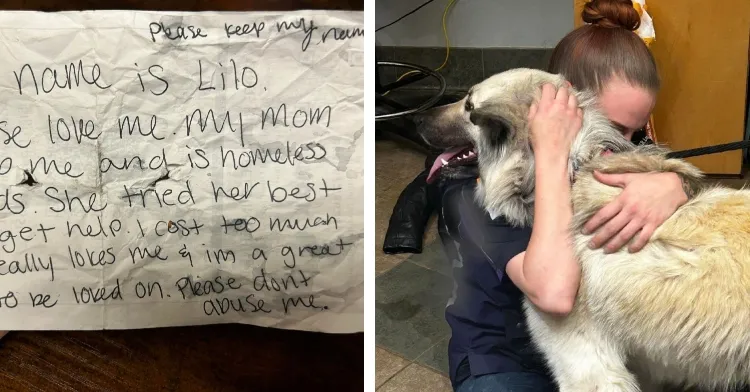
A Dog Found Wandering With a Secret On an ordinary day in Chattanooga, Tennessee, a passerby noticed a dog walking alone through the streets. She looked gentle and approachable, but there was sadness in her eyes. Still wearing her leash, she seemed out of place, as though she had only just been separated from someone who loved her. The Good Samaritan carefully guided the dog to safety and brought her to the McKamey Animal Center. Staff quickly gave her the name Lilo. She was sweet, well-mannered, and clearly used to human affection. But then the team noticed something unusual — attached to Lilo’s collar was a folded slip of paper. What it said explained everything. The Note That Broke Everyone’s Heart Written in shaky handwriting, the note read: “My name is Lilo. Please love me. My mom can’t keep me and is homeless with two kids. She tried her best but can’t get help. I cost too much for her. She really loves me & I’m a great dog & love to be loved on. Please don’t abuse me.” The staff froze as they read it. This wasn’t a story of abandonment out of cruelty — it was one of sacrifice. A mother, struggling with homelessness and two children, had been forced to make the most painful decision imaginable: to part ways with the dog she adored because she could no longer afford to care for her. Shelter staff knew immediately that this was about more than just rescuing a dog — it was about recognizing the pain of a family torn apart by circumstances. A Shelter’s Message of Empathy and The Reunion That Melted Hearts Instead of rushing to rehome Lilo, the McKamey Animal Center team wrote a public message addressed to her owner. Unlike many posts that scold or shame, theirs was filled with compassion: “We are so sorry you had to make this choice. We know you love Lilo. She is safe with us, her name will stay the same, and she will be loved while she is here. If you see this, please reach out — we want to help you, not judge you. Our wish is to reunite Lilo with the family she loves.” The shelter’s post quickly spread online. Thousands of people were moved by both the mother’s letter and the shelter’s response. For once, the conversation wasn’t about blame — it was about understanding and empathy. Just a few days later, the shelter received incredible news: Lilo’s mom had been found. When she came to the shelter, the reunion was pure emotion. Lilo’s tail wagged wildly, and she pushed herself against her mom as though afraid to let go again. Their bond was undeniable — no matter the hardships, the love between them had never faded. While her mom’s life is still full of challenges, the shelter pledged to help her with resources so that, when the time is right, she and her children can safely keep Lilo by their side again. The Larger Problem: Pets and Homelessness Lilo’s story is touching, but it also shines a light on a much larger problem. Many people experiencing homelessness have pets, and for them, those animals are more than companions — they are family, protectors, and a vital source of comfort. But keeping a pet while unhoused comes with enormous obstacles: Faced with these hurdles, some pet owners make heartbreaking choices like Lilo’s mom did. But advocates stress that no one should have to give up their animal simply because they’ve fallen on hard times. Programs such as Feeding Pets of the Homeless and local pet food pantries exist to help, yet many families don’t know these options are available. Lilo’s case highlights the urgent need to expand awareness and resources so pets and people can stay together. Lilo’s Bright Future For now, Lilo is safe, loved, and well cared for at the McKamey Animal Center. Volunteers spend time with her, showering her with affection, while the shelter keeps her story alive online to remind others that compassion is always the right choice. Whether Lilo is ultimately reunited with her mom long-term or adopted into a new forever home, one thing is certain: her life will never again be defined by loneliness and uncertainty. Her note — those simple words, “Please love me” — have already changed countless hearts and inspired people to see pets and their struggling owners with more kindness. Lilo’s story teaches us something powerful: sometimes, when people give up their pets, it’s not because they don’t care — it’s because they love them too much to see them suffer. Instead of judgment, these families need support. Instead of turning away, communities can step in with resources that keep people and pets together. As the shelter’s message said: “We will not judge, and we are here to help in any way we can.” And maybe that’s the greatest message of all — that love, compassion, and understanding can transform even the saddest stories into ones filled with hope.

A Lonely Dog, A Heartbreaking Note, And A Shelter’s Compassion Read More »

Brave Boater Walks the Plank to Save a Struggling Seagull

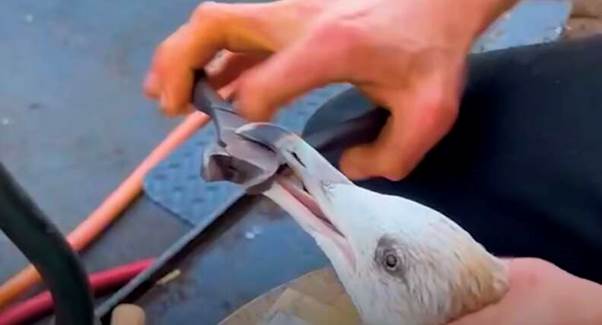
Life at sea is unpredictable. One moment, the ocean is calm and the work aboard a vessel seems routine. The next, a crisis appears out of nowhere — and sometimes it’s not a fellow sailor who needs help, but a creature of the wild. That’s exactly what happened off the coast of Nantucket, when a group of men found themselves in the middle of a dramatic rescue mission involving a distressed seagull, a dangerous situation, and a choice that tested both courage and compassion. An Ordinary Day Turns Into a Rescue Mission The crew had been out on their boat, focused on the tasks of the day, when they noticed a commotion near the rigging. At first glance, it seemed like something small was caught on the wire, but as they got closer, they realized it was a seagull in serious trouble. The bird had become entangled in a stay wire, its body awkwardly suspended, wings beating desperately as it fought to free itself. The scene was heartbreaking. Seagulls are strong, adaptable birds, but when caught in fishing equipment or rigging, they have almost no way to escape on their own. The longer this gull struggled, the greater the risk of exhaustion, injury, or drowning if it fell into the ocean. For the men on board, it was immediately clear that the bird needed their help. The problem was figuring out how to reach it safely. Walking the Plank Rescuing the gull wasn’t as simple as leaning over the edge. The bird was dangling just far enough away that the only possible solution was to crawl along a thin, narrow beam that extended out from the boat over open water. It wasn’t just the height and balance that made this dangerous — beneath the vessel, sharks circled in the choppy waves. A single misstep could have meant serious trouble. Despite the danger, one of the men, Alex Earle, didn’t hesitate for long. With encouragement from his crewmates, he decided to attempt the rescue. Balancing carefully, Alex began inching his way across the narrow bridge. Every step was a test of focus, and the tension in the air was obvious. His friends could be heard warning him: “We just had a couple sharks circling. Don’t fall, dude!” The risk was real, but so was the determination to help the struggling animal. The Moment of Contact When Alex finally reached the gull, the extent of the bird’s ordeal became clear. The wire had not only trapped the bird’s wings, but a hook had pierced near its nostril, leaving it in visible pain. The seagull flapped, squawked, and snapped its beak, trying to defend itself, but it didn’t have the strength to break free. Rescuing a wild bird in distress is no easy task. Unlike domesticated animals, seabirds rarely trust human contact, especially when they are injured. But Alex stayed calm and worked slowly, loosening the wire without startling the gull further. From the safety of the boat, one of his friends called out: “It’s awesome you’re doing this for this poor bird.” It was a reminder of how even small acts of compassion can make a huge difference. Free at Last After several tense minutes of careful maneuvering, Alex finally managed to free the gull from the rigging. But the job wasn’t done yet. The hook was still stuck, and removing it required steady hands. The crew brought the gull onto the deck of the boat, giving them a chance to examine it more closely. Alex worked gently, making sure not to injure the bird further. The gull resisted at times, snapping its beak and wiggling in protest, but eventually the wire came loose. With a final tug, the bird was free. For a few moments, the seagull sat quietly on the boat, catching its breath and adjusting its feathers. Then, with a powerful stretch of its wings, it lifted off into the sky and soared back toward the open water. The boat erupted with cheers of relief and joy. No one had been hurt, the gull was safe, and the sharks circling below had been denied their chance at a meal. Courage, Compassion, and Connection This rescue was more than just a dramatic moment on the water. It was a powerful example of how humans and wildlife are connected. For Alex, balancing on that plank wasn’t just about freeing a bird; it was about demonstrating that compassion should extend beyond our own species. Even small acts of kindness ripple outward. By sharing the story — and the video of the rescue — the crew reminded others that we all have the ability to make a difference, whether it’s pulling plastic from the ocean, reporting an injured animal, or, in Alex’s case, risking a little danger to help a gull in need. As the crew watched their feathered passenger disappear into the horizon, Alex summed up the experience with simple words: “Good deed for the day.” But for those who witnessed it — and for anyone who hears the story — it was much more than that. It was a testament to bravery, empathy, and the unspoken bond between people and the wild creatures who share our planet. The gull may never know the lengths humans went to save it that day, but its freedom is proof that kindness, even in the most unexpected places, can change the course of a life.

Brave Boater Walks the Plank to Save a Struggling Seagull Read More »

Conservationists Spot Gemsbok With a Crown of Spider Webs

When conservationist and wildlife photographer Dr. Jess Isden trekked across the Central Kalahari Game Reserve in Botswana, she expected to encounter the usual wonders of the desert: vast golden plains, thorny acacia trees, and the iconic silhouettes of gemsbok antelopes moving gracefully across the horizon. But on this particular trip, something unusual caught her attention. One striking male gemsbok stood out from the rest. His tall, pointed horns — usually sharp and gleaming — were covered in a strange, glistening mass of spider webs. At first glance, it looked like delicate silk threads catching the sunlight, but as Dr. Isden drew closer, she realized that the webs were not just loose strands. They were dense, layered, and home to several small spiders that had made this antelope’s horns their permanent residence. A Rare and Unexpected Discovery While gemsbok are often seen brushing through shrubs and thorny vegetation, occasionally picking up bits of debris or even thin spider strands, this particular sight was something completely out of the ordinary. “We’ve seen gemsbok with light webbing before, but nothing close to this level,” Dr. Isden shared. The tangled crown looked as though it had been building up for days, forming an almost regal headpiece that gave the animal a surreal, mystical appearance. Most observers would assume that the antelope would quickly rid himself of such an adornment by rubbing against trees or rocks. Yet, when Dr. Isden and her team returned days later, they were amazed to see the very same gemsbok still wearing his elaborate crown, perfectly intact. A Question of Tolerance or Choice This raised an intriguing question: was the webbing simply an accident, or was the gemsbok deliberately tolerating it? Typically, large herbivores like gemsbok are quick to shake off irritants or scrape their horns against rough surfaces to free themselves from anything unusual. But in this case, the male showed no effort to remove the thick webbing. Dr. Isden speculated that the antelope may have chosen to leave the webs alone, suggesting a degree of tolerance — or perhaps even an understanding that the arrangement provided some kind of benefit. Could It Be a Symbiotic Relationship? When Dr. Isden shared photos of the horned spectacle online, people began buzzing with theories. Many believed the antelope had simply blundered into a large web, picking it up by accident. But others wondered if something deeper was at play. Some suggested a possible symbiotic relationship between the gemsbok and the spiders. Spiders living on the horns would have access to a steady stream of insects drawn to the large animal’s body. In return, they might help the gemsbok by reducing the number of biting flies and parasites that often pester antelopes in the wild. One commenter even joked that the gemsbok had found his own natural “insect repellent.” Another pointed out that spiders often thrive in places where food is abundant, and the horns may have provided both a safe home and a near-constant buffet. Gemsbok: Masters of Survival in Harsh Environments To fully appreciate this unusual discovery, it helps to understand the gemsbok itself. Known for their long, spear-like horns and striking black-and-white facial markings, gemsbok are one of the most iconic antelope species of the African savannah. They are superbly adapted to the harsh desert conditions of the Kalahari, able to survive extreme heat and long periods without water by drawing moisture from the plants they eat. Male gemsbok use their horns for both defense and dominance, often engaging in sparring matches with rivals. For such an important feature of their survival, the idea that one male allowed his horns to host spiders is remarkable. It suggests that the animal either wasn’t inconvenienced by the webs or, perhaps, even benefitted from them in subtle ways. Nature’s Unexpected Partnerships The natural world is filled with surprising collaborations between species. Birds like oxpeckers famously perch on large mammals, feeding on ticks while keeping their hosts relatively parasite-free. Cleaner fish remove debris from the mouths of larger fish, helping both species thrive. Could this gemsbok and his eight-legged companions be another example of such cooperation? While it may not have been intentional, the relationship seemed to work. The spiders had a secure, elevated home with endless food opportunities, while the gemsbok likely enjoyed fewer biting pests around his face and body. A Crown Fit for a King For days, the gemsbok roamed the savannah with his unusual crown, completely unbothered by the extra weight or appearance. To the conservationists watching, it was a breathtaking reminder of how adaptable and unpredictable nature can be. What began as a curious observation turned into a fascinating glimpse into the possibilities of interspecies tolerance. Whether by accident or design, the gemsbok wore his silken crown with a quiet dignity — while his tiny passengers thrived in their unusual mobile fortress. As Dr. Isden put it, “The spiders seemed quite content, and the gemsbok didn’t appear to mind at all. In their own way, they made the perfect pair.”

Conservationists Spot Gemsbok With a Crown of Spider Webs Read More »

Kayaker Does A Double Take When He Spots An Injured Animal In The Reeds

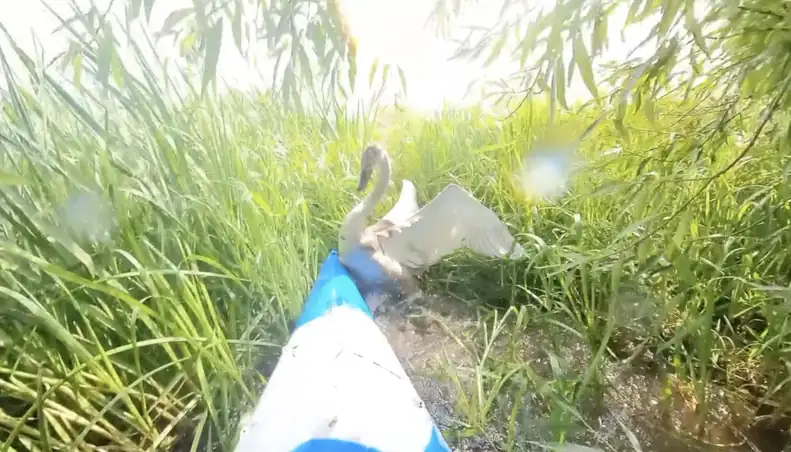
On a warm afternoon in Anne Arundel County, Maryland, a kayaker gently paddled along the quiet bends of the South River. The water shimmered under the sun, framed by tall reeds swaying in the breeze. But suddenly, something unusual broke the peaceful scene — a pair of piercing eyes peering out from the tangled green. At first glance, the kayaker thought he was imagining it. But as he steered closer, he realized he was looking straight at a wounded bald eagle, the very bird that rescuers had been desperately searching for all day. A Rescue That Nearly Slipped Away Earlier that morning, wildlife advocate Donna Cole had been alerted about a bald eagle struck by a car on a nearby highway. Police officers had quickly stepped in, rerouting traffic and keeping the distressed bird from further harm as he staggered toward the river. By the time Cole arrived, however, the eagle had disappeared into dense woodland. “It was a deeply wooded area with thick brambles and thorny bushes. There was no way to safely reach him,” Cole explained. Recognizing the challenge, she shifted strategies and sought help on the water instead. With the support of John Flood, a board member of the Arundel Rivers Federation, Cole took to the river. They searched for hours in the sweltering heat, but the eagle stayed out of reach. Exhausted and empty-handed, they had to temporarily retreat. An Unexpected Ally On The Water That’s when fate intervened. A kayaker, gliding across the opposite side of the river, noticed the injured eagle resting weakly among the reeds. He quickly reported the sighting, giving Cole a second chance. “It was like two miracles in one,” Cole recalled. “First, the police officer found the eagle, and then the kayaker spotted him again. Without them, we never would’ve had the chance.” Rushing back with renewed determination, Cole and Flood met the kayaker at the site. Navigating shallow waters, Flood maneuvered his boat close while Cole leapt into knee-deep mud. Brambles scratched her arms, and in the scramble, she even lost a shoe — but none of that mattered. With steady hands, she finally secured the eagle. Safe At Last The majestic bird, though battered, was alive. Carefully placed in a transport box, he was rushed to the Owl Moon Raptor Center, where he began a long recovery journey under specialized care. For Cole, the emotional weight of the rescue was overwhelming. “This was the longest, the most impossible rescue I’ve ever done,” she admitted. “The relief I felt when I finally held that eagle … it’s a moment I’ll never forget.” Why Every Eagle Matters Bald eagles, once endangered due to habitat loss and pesticide poisoning, have made a remarkable comeback across the U.S. thanks to decades of conservation work. Still, they face modern threats from vehicle collisions, power lines, and human development. Each rescue — like this one — is more than saving a single bird; it’s helping protect a symbol of resilience and freedom. Thanks to the quick-thinking kayaker, the dedication of police officers, and the tireless efforts of volunteers like Cole and Flood, one eagle has a second chance at soaring over Maryland’s skies again

Kayaker Does A Double Take When He Spots An Injured Animal In The Reeds Read More »

Construction Workers Shocked As Four Baby Owls Tumble Out Of Air Vent

At first, the noise on the construction site sounded routine — clanging tools, hammer strikes, and workers’ voices bouncing around the half-built structure. But then, in the middle of the bustle, came a completely different sound: high-pitched cries. Within seconds, the workers realized something unexpected had happened. From a torn air vent above, four fluffy screech owl babies had fallen straight to the concrete floor. Startled and unsure what to do, the crew immediately contacted WILD Florida Rescue (WFR) for help. Volunteers Adriane and Lulu answered the urgent call, not knowing this would become one of their most delicate rescues yet. A Family Suddenly Separated When Adriane and Lulu arrived, they quickly assessed the situation. The babies were too young to fly, and while their frantic parents circled nearby, there was no way for them to scoop their little ones back into the nest. Following guidance from Florida Fish and Wildlife, the team’s first attempt was to install a temporary nest box just outside the construction zone, giving the parents a safe alternative. But the owls had other ideas. “The parents did not like that,” WFR shared. The adults refused to approach the box, leaving their babies hungry and alone through the night. A Rescue Plan That Took Days, Not Hours Realizing the first attempt had failed, the volunteers regrouped. Early the next morning, they carefully returned the nest box closer to the owls’ original spot inside the structure. This time, the parents swooped right in, resuming care for their chicks as if nothing had happened. The relief was immediate, but the team knew there was still risk. Construction work continued, and the vent that had sent the babies tumbling once could easily do so again. To protect the owlets while still respecting the parents’ instincts, Adriane and Lulu tried one last adjustment. They created a hybrid solution — a nesting box positioned between the inside and outside of the construction site. It gave the parents easy access but kept the little ones out of harm’s way. Finally, everyone — workers, rescuers, and owl parents — could breathe easier. Watching The Babies Grow Stronger To ensure the family remained safe, WFR installed cameras near the nest. Over the following weeks, volunteers monitored the owlets’ progress daily. What they witnessed was magical: the once helpless fluffballs slowly grew feathers, strength, and confidence. Day by day, the little owls transformed into fledglings, stretching their wings and learning the lessons only their parents could teach. By keeping them with their family rather than moving them into human care, Adriane and Lulu had given the babies the very best chance at thriving in the wild. Why Owls Sometimes Nest in Strange Places Screech owls are cavity nesters, meaning they seek out small, enclosed spaces for their eggs and young. In natural settings, this usually means hollow trees. But as more wild areas are cleared for development, owls often adapt by nesting in chimneys, vents, or even attics. While it may look unusual, this behavior shows just how resourceful wildlife can be. Unfortunately, it can also put both the animals and humans in difficult situations, like this construction site rescue. Experts recommend installing owl nesting boxes in safe areas nearby to give these birds better options — something homeowners and builders alike can consider. A Rescue That Truly Came Full Circle Not every wildlife rescue goes according to plan. Some require quick fixes; others demand patience, persistence, and creativity. For Adriane, Lulu, and the team at WFR, this mission had been nerve-wracking but worth every moment. “We are so thrilled, even with all the work and worries, that these babies remained with their parents to fledge,” WFR celebrated in a post. In the end, the construction workers got to continue their project, the volunteers ensured the owlets’ safety, and the owl parents were able to do what nature intended — raise their family together. It’s a story that proves sometimes the best rescues are not about removing wildlife from danger but about finding ways to let families stay whole. And for these four owlets, that made all the difference.

Construction Workers Shocked As Four Baby Owls Tumble Out Of Air Vent Read More »

Rescuers Watch In Horror As Raccoon Falls From Bridge — Then Cheer When He Swims To Safety

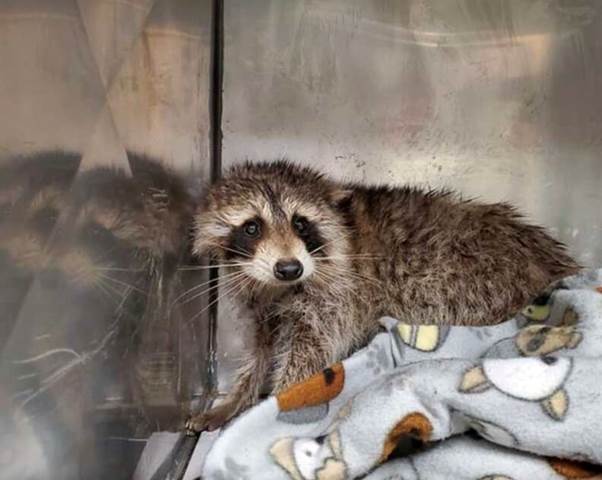
Every morning, Tom drove the same familiar route across Pennsylvania Route 462, a bridge towering above the wide Susquehanna River. The commute had become so routine that little ever caught his eye — until one chilly autumn morning when something unusual made him slow down. Perched on top of one of the stone bridge piers, shivering against the wind, was a furry figure. At first, Tom wasn’t even sure what it was. But when he looked closer, he realized it was a raccoon — stranded, alone, and in deep trouble. A Commuter’s Compassion Tom figured maybe the animal was just lost and would find his way down. But when he passed by again the next day, the raccoon hadn’t moved an inch. The poor creature looked frozen in place, clinging to the cold stone. Tom quickly pulled over. He didn’t have rescue gear, but he had something he hoped might help — the jacket off his back. Carefully, he draped it over the raccoon to keep him warm. Then he called the local police and prayed rescuers would come soon. Sadly, when Tom returned after work that evening, his heart sank. The raccoon was still there, tucked under the jacket, too scared or weak to move. This time, Tom knew he needed specialized help — and he reached out to Raven Ridge Wildlife Center. A Rescue Attempt Gone Wrong With the assistance of local police, Raven Ridge rescuers climbed onto the narrow bridge platform, nearly 100 feet above the icy river. The plan was simple but risky: net the raccoon and bring him safely back to land. For a few tense minutes, it seemed like the rescue would work. But just as they were about to catch him, a loud tractor-trailer thundered across the bridge. Startled by the noise, the raccoon panicked — and leapt off the edge. Time froze. The rescuers gasped, horrified, watching the animal tumble toward the water. Against The Odds — A Fighter Survives Just when everyone feared the worst, a small furry head broke the surface of the river. The raccoon was alive — and he was swimming. Against the strong current and biting cold, he paddled determinedly toward shore. The rescue team split up. One rescuer remained on the bridge to keep eyes on him, while another rushed down to the riverbank. Despite being exhausted, the raccoon hesitated at the shoreline, too frightened to climb out on his own. That’s when the rescuers made the ultimate show of bravery — wading into the freezing water themselves. Slowly and gently, they guided the raccoon into their net and carried him onto solid ground. Wrapped in blankets, the shivering little survivor was finally safe. A Happy Ending Back In The Wild At Raven Ridge Wildlife Center, rescuer Tracie Young examined the raccoon. Miraculously, aside from being wet, chilled, and worn out, he had no serious injuries. “He looked great,” Young said. “I just think he kind of got in the wrong place at the wrong time.” After a short period of rest and recovery, the raccoon was released back into the wild — exactly where he belonged. “We were able to release him,” Young shared. “Hopefully this raccoon never sees another person again.” For Tom, the kind commuter who refused to ignore an animal in distress, and for the brave Raven Ridge team who risked the freezing waters to save him, the raccoon’s survival was nothing short of a miracle. Sometimes, even the smallest creatures remind us how resilient life can be — and how much hope exists when compassion and courage come together. 🦝💙

Rescuers Watch In Horror As Raccoon Falls From Bridge — Then Cheer When He Swims To Safety Read More »